
Which Nostr Client Should You Actually Start With?
The first app question is usually not technical. A reader wants to know which client to open, why Damus feels different from Amethyst, Primal, Coracle or noStrudel, and what still follows them when they switch.
Start with the window, not the myth
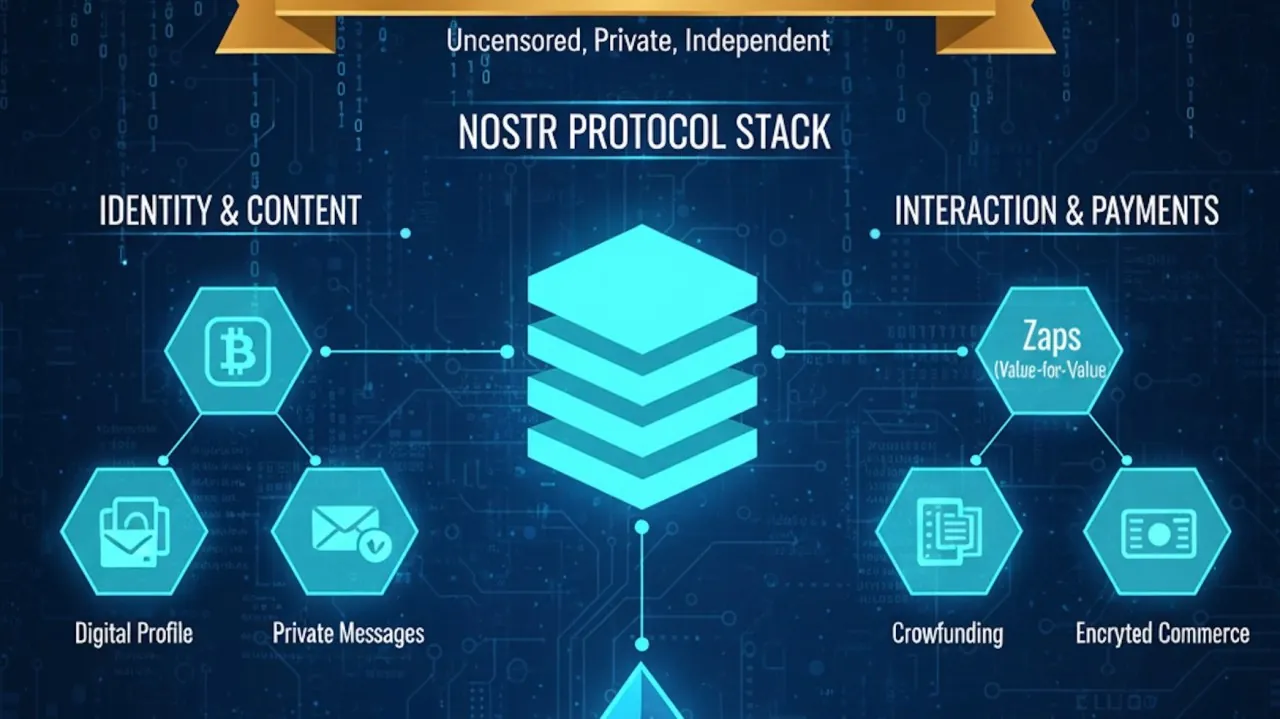
A Nostr client is the product most people meet first, so it is easy to mistake the client for the network. That is the first thing a good Apps hub has to undo. Damus, Amethyst, Primal, Coracle, noStrudel, Iris, Snort, Gossip, Nostur and newer clients can all show Nostr, but each of them chooses a different balance between polish, control, discovery, relay visibility, media support, wallet flow and raw protocol exposure.
For a reader, that difference is not a nerd detail. It decides whether Nostr feels alive or empty, safe or confusing, familiar or alien. A mobile-first client can make the protocol feel like a normal social app. A web client can make relay and event behavior easier to inspect. A consumer client with strong indexing can feel smooth while hiding some of the machinery. A protocol-forward client can teach the model but ask more from the reader.
The practical question is not which client is universally best. The better question is which client is best for the first job: reading and posting, testing portability, managing relays, publishing, chatting, exploring media, using zaps or learning how Nostr really works.
What moves when you switch clients
Nostr identity is tied to a key, not to one client account. That is why switching clients can feel different from leaving a normal platform. Your public key, profile metadata, follows and published events can be understood by other software when the relevant events are available and the client supports the right standards. This is the promise that makes Nostr interesting.
But the promise has edges. A new client still has to discover relays, read event kinds, render media, understand follows, show replies, deal with spam, support zaps and handle long-form or group features. If those pieces are missing, the same identity can feel rich in one app and thin in another. That does not mean portability is fake. It means product quality and protocol coverage matter.
This is why a client comparison should look beyond screenshots. Check platform support, signer support, relay controls, NIP support, media handling, search, onboarding, source availability and how the app explains key custody.
The major client families
Damus is important because it made Nostr feel native on Apple devices and became one of the most visible early mobile clients. Amethyst is central on Android and is also useful because its source repository makes implementation choices visible. Primal is a polished consumer surface with feeds, discovery, wallet context and publishing features. Coracle leans toward a web client that exposes more social-graph and relay thinking. noStrudel is valuable for readers who want to see a wider range of event types and protocol behavior through a web interface.
Those names are examples, not a closed list. The ecosystem is broader: Nostur, Gossip, Iris, Nos, Snort, Jumble, Openvibe and many others exist for different platforms and use cases. The point of the Apps hub is to keep the shelf readable while preserving the long tail. A beginner needs a short path. A researcher needs the archive.
A strong hub page should help both. It should give the beginner a few sensible doors, then let the curious reader open the route map, feature matrix, source pages and category shelves.
How to choose without getting trapped
A safe first-client test is simple: create or import an identity using the safest key path you understand, follow a few known accounts, post something small, inspect how the client handles relays and try opening the same identity in a second client. The comparison teaches more than a marketing page. What follows you? What disappears? Which app explains itself? Which one asks for more trust than you expected?
If a client asks for your private key directly, slow down and read the signer article first. Direct key entry is common in older or simpler flows, but it is not the habit a new reader should learn blindly. Browser signing, mobile signing and remote signing exist because clients should not always be the place where the key lives.
The best client for a reader is the one that matches their current job while leaving them smarter and safer when they leave.
A reader checklist before choosing
A good first client should answer a few plain questions without making the reader feel slow. Can I create or import an identity without losing the private key? Can I see which relays are being used? Can I follow people, publish a note, read replies and open a profile without guessing where the data went? Can I export or reuse my identity somewhere else? Can I tell whether zaps, long-form posts, images or direct messages are supported as first-class features or only partially rendered?
This is why the app directory, the Nostorg matrix and nostr.how belong beside individual product pages. A product homepage tells the story the product wants to tell. A feature matrix and directory show how the product sits next to others. A reader should use both: the official source for intent, the comparison source for coverage, and the actual app for lived behavior.
The subtle part is that a client can be excellent for one reader and wrong for another. Damus may be the cleanest entry for someone already on iOS. Amethyst may be the practical choice for Android power use. Primal may be the smoothest consumer surface for people who want discovery and wallet-adjacent features. Coracle or noStrudel may teach the network better because they expose more of the protocol. The useful article does not crown a winner. It helps the reader recognize their own first job.
What to check after the first week
The first week with a client is not enough to judge Nostr. The second check is more revealing: open the same identity in another client, compare the follow list, replies, mute behavior, relay list, article rendering and wallet or zap state. If the switch feels surprisingly normal, the client is helping the protocol promise become real. If the switch feels broken, the next question is whether the problem is relay discovery, unsupported event kinds, private app data or a product choice.
That distinction matters because it keeps criticism fair. Sometimes Nostr is rough because a standard is still young. Sometimes an app is rough because it hides too much. Sometimes a polished app is useful precisely because it runs extra indexing or server-side support that is not universally portable. A good reader should know which case they are looking at before they judge the whole ecosystem.
The real first question is what kind of window you need
A reader does not open this page because they want a slogan about apps. They are trying to decide which app will let them understand Nostr without mistaking one interface for the whole network. In the Apps hub this matters because clients are the place where keys, relays, follows, notes, media, zaps and moderation all become a single experience. The page has to translate protocol language into a product decision a normal person can actually make.
The first useful move is to name the category without making it sound final. Damus, Amethyst, Primal, Coracle, noStrudel, Iris, Nostur, Snort and YakiHonne all belong in the conversation, but not because they are interchangeable. Damus makes sense as an iOS-native social doorway, Amethyst is a serious Android client, Primal wraps discovery and wallet-adjacent features into a consumer surface, while Coracle and noStrudel expose more of the protocol for readers who want to see how relays, filters and event kinds behave. That difference is the point of the article, not a footnote.
A good reader path also respects time. Someone may arrive with five minutes, wanting a safe first click. Someone else may be comparing products for a serious workflow. The article gives both readers a way in: start with the job, look at the evidence, then decide whether the product boundary is acceptable.
That is why the text stays close to user consequences. It asks what the reader can do, what they can take with them, what they are asked to trust and what breaks when the app changes. The answer is different for every category, which is why these hub cards need real pages rather than decorative blurbs.
The first comparison belongs in the reader hands
The source trail starts with official product sites, repositories where they exist, NostrApps, Nostr Compass, the Nostorg feature matrix and nostr.how client guidance. Those sources are not all equal. An official page explains intent. A repository shows implementation and maintenance. A directory gives discovery context. A live product test shows what the reader actually experiences. A standards document explains whether other tools can understand the result.
The article uses examples as anchors, not as a popularity contest. Damus, Amethyst, Primal, Coracle, noStrudel, Iris, Nostur, Snort and YakiHonne help the reader see the shape of the category. The goal is not to say that every named product is the right choice. The goal is to show the range of choices and the questions that separate one product from another.
This distinction is important because the Nostr app market is uneven in a healthy but confusing way. Some products are polished consumer surfaces. Some are developer tools. Some are experiments that prove a useful pattern. Some are half-active but historically important. The article has to let those states exist without pretending they are the same.
A reader-first page therefore keeps claims modest. It can say what a product appears to do, which standards it touches, which sources support the description and which parts require more trust. That makes the page more useful than a directory that only repeats names.
The standards are visible only when a client fails or travels well
The standards layer matters when it changes what a reader can take with them. For this topic the important references include NIP-01 for events, NIP-05 for names, NIP-07 and NIP-46 for signing, NIP-19 for shareable identifiers, NIP-23 for long-form posts, NIP-65 for relay lists and NIP-57 for zaps. Those names are not included as decoration. They explain why one app can open another app's work, why a signer prompt appears, why a wallet connection can be limited, or why a relay setting changes what the user sees.
Nostr is easy to describe badly because public keys and relays sound like the whole story. They are not. The user experience depends on how the product handles event kinds, identifiers, signer requests, relay lists, media references, payment signals and app-specific data. Standards are the shared grammar, but the product still decides whether the grammar becomes readable.
That is also why a product can be both useful and limited. An app may implement the right standard for one job and ignore another job completely. That is not automatically a failure. It becomes a problem only when the product or the article implies broader portability than the implementation actually offers.
The page therefore connects standards to behavior. If the reader cannot see the consequence, the standard reference is not doing its job. The article explains the consequence first, then links the underlying document for anyone who wants to verify the claim.
Where client choice goes wrong
The main risk is simple: a polished client can hide relay choices, unsupported event kinds or server-side assumptions so well that a reader blames Nostr for a product boundary. That risk does not make the category bad. It tells the reader where to slow down. Nostr rewards curiosity, but not every app deserves the same identity, wallet connection or trust budget on the first click.
The failure mode often appears as friction that looks small at first. A missing relay, a vague prompt, a stale repository, a closed feature, a broken media link, an unclear wallet budget or an unsupported event kind can turn into a larger trust problem when the reader starts depending on the product.
A fair article names those limits without drama. It does not punish young projects for being young. It does not hide risk behind enthusiasm either. If the source trail is thin, the text says so. If the product is strong but narrow, the text says that too. The reader can handle nuance when the page gives it plainly.
This is where the Apps hub becomes more than a catalog. It teaches a review habit. Look for the trust boundary, look for the source, look for the standard, look for what travels and look for what stays inside one product. That habit works across clients, wallets, publishing tools, marketplaces and developer infrastructure.
A calm route through the client market
A practical route starts here: open one polished client, one more protocol-visible client, then compare the same npub, note, relay settings and wallet behavior before deciding where to live day to day. This is not a rigid checklist. It is a way to avoid the most common mistake, which is opening many products without knowing which layer is being tested.
For a reader, the best next click is the page that answers the next concrete question. If the problem is identity, go to signers and key safety. If the problem is money, go to wallets, zaps and NWC. If the problem is writing, go to publishing. If the problem is source confidence, open the source trail. If the problem is implementation, go to the developer stack.
For a builder, the same route becomes a product audit. Which standards are actually implemented? Which events can another client read? Which permissions are asked at the right moment? Which docs or repositories prove the claim? Which parts are custom and need to be named clearly?
That is the reader promise of the Apps hub: it does not ask people to memorize the ecosystem. It gives them a route through it. Each article turns a confusing shelf of apps into a sequence of decisions that can be checked, compared and revisited as the Nostr market changes.
A reader who has used only centralized apps usually expects the app to be the account. Nostr breaks that habit. The account is closer to the key, the network is closer to signed events and relays, and the app is a window with opinions. That sounds simple, but it is the first thing most people forget when a timeline looks empty or a reply is missing.
The better first-client article therefore does not crown a universal winner. It helps the reader choose a doorway for the job in front of them: mobile posting, web exploration, long-form reading, community moderation, media discovery or protocol learning. The best choice changes when the job changes.
Three reader situations that change the answer
The first situation is the beginner who only wants a safe start. For that reader, which nostr client should you actually start with? is not an abstract category. It is a way to avoid the first bad decision. The useful answer is not a full market map. It is the smallest route that makes the next click understandable: what to try, what to avoid, which source to open and which part of the product is asking for trust.
The second situation is the regular Nostr user who already has a key, follows, relays and habits. That reader is not starting from zero. They want to know whether Damus, Amethyst, Primal, Coracle, noStrudel, Iris, Nostur, Snort and YakiHonne can improve a real workflow without breaking something that already works. For them, the page has to talk about switching cost, data portability, product limits and whether the same identity behaves consistently across tools.
The third situation is the builder, operator, creator or researcher who reads the Apps hub as an evidence map. That reader cares about official product sites, repositories where they exist, NostrApps, Nostr Compass, the Nostorg feature matrix and nostr.how client guidance, but also about the gap between a claim and a working implementation. They may not use the app every day, yet they need to know which projects show the category clearly and which standards or repositories explain the behavior behind the interface.
Those three readers need different levels of detail, but they share one question: what can be trusted after the first impression fades? A good product surface may look simple, but the reader still needs to know what signs the event, where the data travels, what a wallet or relay can do, which source supports the claim and what happens when the user tries another app.
That is why the Apps hub keeps product pages, category pages, source pages and NIP references close together. The beginner can stay with the practical route. The experienced user can compare products. The builder can open the source trail. The same article serves all three only when it refuses to flatten the category into a single recommendation.
The trust boundary behind the product choice
Every Apps article eventually reaches a boundary. In this topic, the boundary is shaped by NIP-01 for events, NIP-05 for names, NIP-07 and NIP-46 for signing, NIP-19 for shareable identifiers, NIP-23 for long-form posts, NIP-65 for relay lists and NIP-57 for zaps. Those standards do not make the product trustworthy by themselves, but they reveal what kind of promise the product is making. If the product signs, pays, publishes, relays, encrypts, lists, indexes or renders something, the reader needs to know where that action begins and where it stops.
The easiest mistake is to trust the visible surface more than the underlying boundary. A clean interface can still request too much key access. A familiar icon can still point to stale docs. A wallet button can still hide broad permissions. A beautiful publishing view can still store the useful parts in a private way. A developer repository can still be abandoned. None of that means the product is useless. It means the reader needs context before commitment.
The practical test is to separate four layers. First, what does the app show? Second, what does it sign, store, request or publish? Third, which other products can understand the result? Fourth, which source lets the reader verify the claim? When those layers are visible, a reader can make a calm choice. When they are blurred, the app may feel easier at first and more fragile later.
This is also where Nostr differs from a normal platform review. A centralized app review often asks whether the service is pleasant and trustworthy as a whole. A Nostr app review asks a more layered question: which part belongs to the user, which part belongs to the app, which part belongs to relays, which part belongs to a wallet or signer and which part belongs to a standard that other tools can share.
The category is strongest when a reader can leave without losing the important thing. That important thing changes by topic: identity, follows, content, payment context, group membership, media references, listing history, source evidence or implementation knowledge. The page keeps returning to that exit question because it is the quiet test behind most Nostr app choices.
How this topic connects to the rest of Apps
No Apps topic stands alone for long. Which Nostr Client Should You Actually Start With? quickly touches other routes because Nostr products overlap. A client may need a signer. A publishing tool may need media hosting. A marketplace may need private messaging and wallet flow. A creator app may need zaps, live events and archive storage. A developer tool may explain why a product feature works or fails.
For that reason, the next click is part of the content, not decoration. open one polished client, one more protocol-visible client, then compare the same npub, note, relay settings and wallet behavior before deciding where to live day to day. If that test raises a key question, the reader moves to signers. If it raises a payment question, they move to wallets and NWC. If it raises a standards question, they move to NIPs. If it raises a source question, they open the evidence trail. The route adapts to what the reader discovers.
The page also has to protect the wider map from confusion. Some products belong in more than one category. Alby can be read as wallet infrastructure, browser tooling and NWC context. Primal can be read as a client, wallet-adjacent surface and publishing reader. YakiHonne touches publishing and community. Mostro touches commerce, messaging and trust. The hub should show those overlaps without sending the reader in circles.
A useful overlap is not a duplicate. It is a reader path. When the same product appears from two routes, each page explains a different question: what the product does in this category, what source supports that description and what the reader needs to compare next. That is how a large Apps route stays navigable instead of becoming a pile of names.
The final result is simple from the outside. The reader starts with the job. The hub suggests the right kind of app. The article explains the trust boundary. The source list shows where the claim came from. The next route handles the adjacent question. That is the difference between a directory and a useful map.
Where this topic belongs in the Apps hub
Client choice is the front door of Apps because every other product category is easier once the reader understands the split between identity, client, relay and signer. Wallets make more sense after the reader has seen zaps inside a client. Publishing tools make more sense after they know why an article can be addressed outside one website. Developer tools make more sense after the event model is visible in a real interface.
This article is therefore not a directory dump. It is the reader-facing guide to the first decision: which window should I open, and what does that window actually control?
Sources worth opening
- Nostr Apps - Large app directory used as a discovery source for product categories.
- Nostr Compass projects - Broad project directory with clients, wallets, signers, relays and tooling.
- Nostorg client matrix - Client comparison matrix for platform and NIP support.
- nostr.how clients - Beginner-friendly explanation of Nostr clients.
- NIP-01 - Base event and client-relay protocol model.
- NIP-05 - DNS-based identifiers for human-readable Nostr names.
- NIP-19 - bech32 forms such as npub, note, nevent and naddr.
- NIP-65 - Relay list metadata for read and write relay discovery.
- Damus - iOS and macOS-oriented Nostr client.
- Amethyst GitHub - Android Nostr client source repository.
- Primal - Consumer Nostr client with feeds, wallet and publishing surfaces.
- Coracle - Web client focused on relay-aware social use.
- noStrudel - Web client for exploring Nostr through many event types.