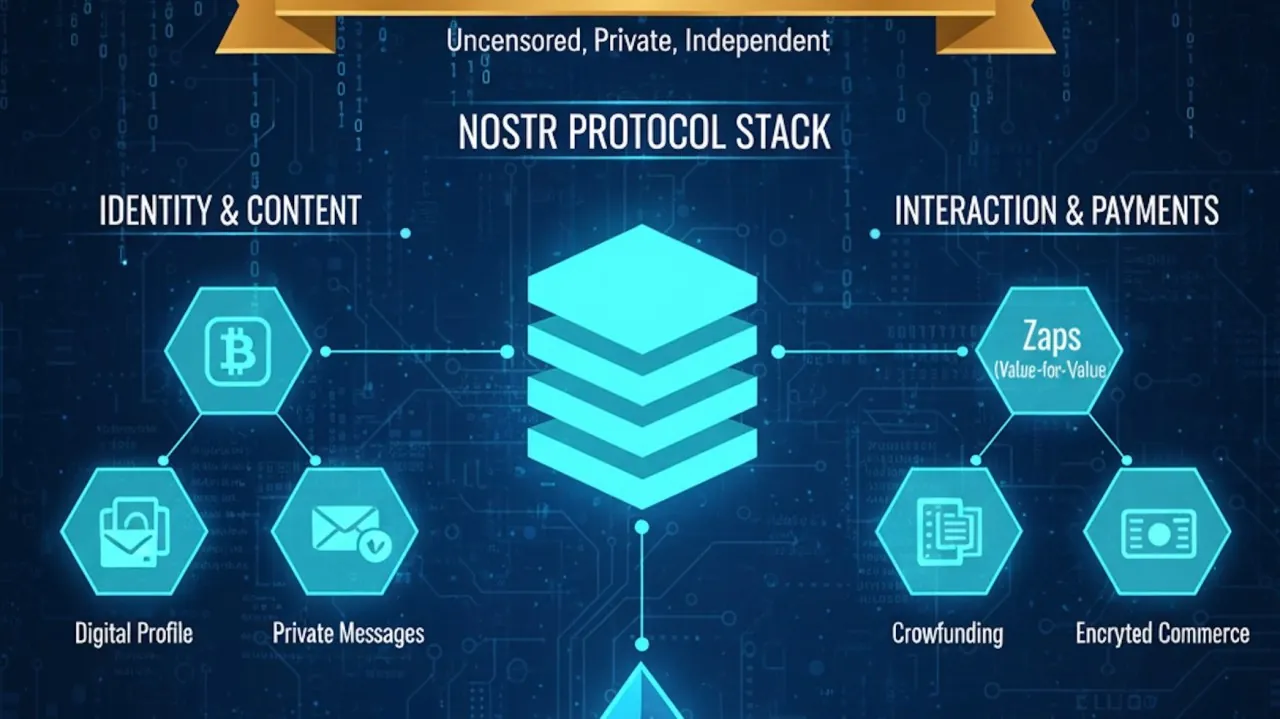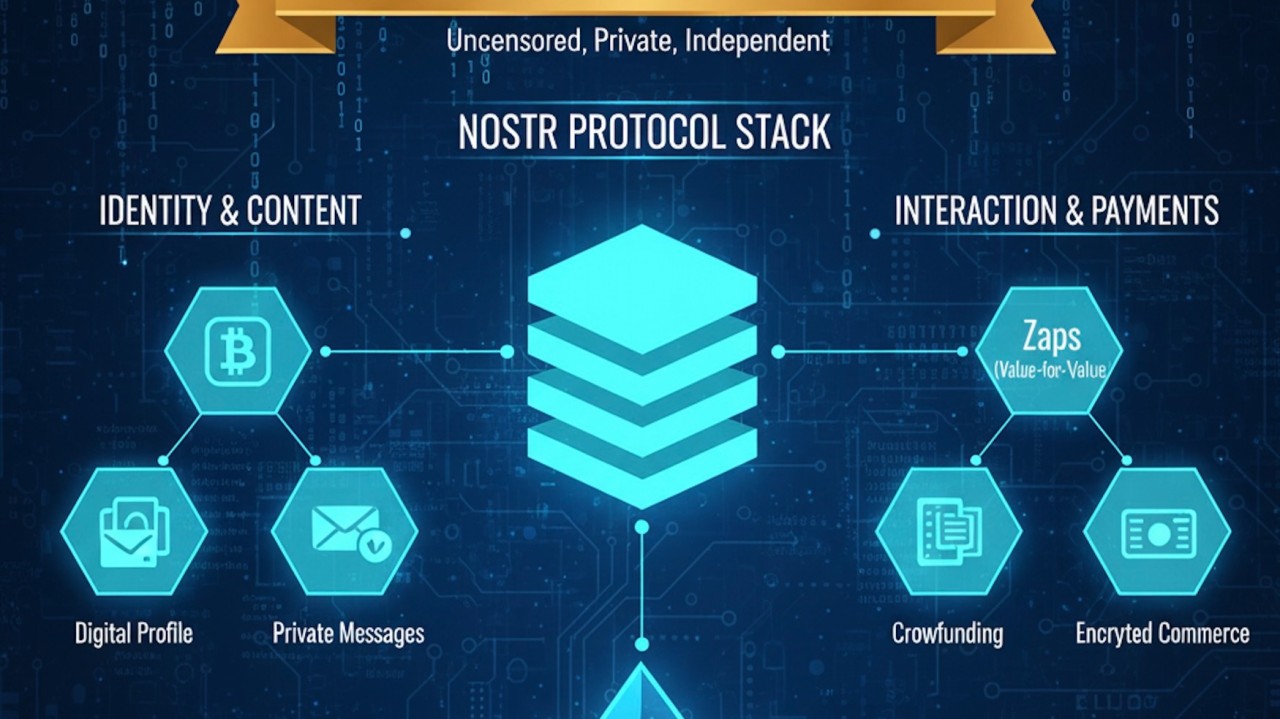
Getting Started with Nostr
The first Nostr session is not about chasing every client or NIP. It is about setting up identity safely, choosing a sane client, understanding relays and avoiding the private-key mistakes that turn curiosity into regret.
Start with the risk
The first good Nostr lesson is not philosophical. It is operational: do not paste a real private key into random websites. That one rule prevents more damage than any grand explanation of decentralization. A Nostr private key is not a normal password. There is no platform support desk that can reset the account after a leak. Whoever controls the private key can sign as that identity.
A beginner often arrives through a client, sees a login box and assumes the usual web pattern applies. It does not. Some clients are excellent. Some are experimental. Some are old. Some are honest but rough. Some may ask for more trust than a new user can judge. The safe path is to separate the Nostr idea from the first app you try.
This guide treats the first setup as a small security ceremony. Not a paranoid ritual, just a deliberate sequence. Learn what the key is, make or import it carefully, prefer a signer where possible, pick a client that explains itself, add a basic profile, use a few reasonable relays and follow enough real people to make the timeline legible.
The first safe path
A practical first path looks like this. Read the key model. Create a new identity for learning, unless you already know exactly where your key came from. Store the secret somewhere you control. Use a browser signer or remote signer for web clients when available. Choose one mainstream client rather than five at once. Fill a small profile. Follow real accounts from trusted lists or people you already know. Watch how clients and relays behave before touching money features.
That sequence is slower than clicking a social sign-up button. The extra care is the price of self-owned identity. Once the model clicks, Nostr becomes less scary. You realize the client is not the account. The account is the key. A signer can protect that key. Relays carry events. A profile can be re-rendered by multiple apps. A follow list can travel. A zap is a payment event layered into the social experience, not the entry ticket.
Nostr.how gives similar beginner advice in plainer setup terms: understand keys, distinguish the protocol from a client, and use a signing extension for web apps where possible instead of pasting the private key into a browser form. That is a good starting standard for the whole Basics section.
Make a key you understand
A Nostr identity begins with a key pair. The public key is safe to share. It can be encoded as an npub, which is what most people recognize. The private key is the secret. It may appear as an nsec. Treat it as live authority over the identity. If you are experimenting, create a fresh test key and do not attach your public reputation, money or long-term contacts to it yet.
A new user also needs to understand backups. If a client generates a key but does not make backup obvious, stop and check the key flow before building a real identity there. If a private key is stored only on one phone and the phone dies, the identity can be gone. If the key is copied into a plain text note, cloud document or screenshot folder, the identity may already be weaker than the user thinks.
This is where normal web instincts betray people. Password reset trains users to believe mistakes can be reversed by email. Nostr does not have that center. You can publish a new key and tell people to follow it, but you cannot make the old compromised key uncompromised. The whole setup gets easier once you treat the key as a signing root rather than a site password.
Choose a client for the job
Pick the client that matches the first job. If you want a polished public timeline, choose a mature social client. If you want encrypted messaging, choose a chat-first client and read how it handles NIP-17, NIP-44 and gift wrapping. If you want long-form writing, choose a publishing client. If you want mobile-native posting, choose a strong mobile app. If you are a developer, use a client and a toolchain that make raw events visible.
Do not judge the whole protocol by one client. That is like judging email by one inbox app. A client can have bad onboarding, weak search, confusing relay handling, missing notification support or awkward media handling while the underlying model remains useful. The reverse is also true: a slick client can hide risky key handling or wallet permissions.
The Crays Apps section exists because the product layer matters. Nostr only becomes understandable when readers can see the difference between protocol primitives and product choices. The same key can appear through different apps, but the experience, safety posture and feature set can differ sharply.
Use a signer when you can
A signer is a tool that holds or reaches your private key and signs events for clients. In the browser, NIP-07 defines the window.nostr interface that an extension can expose. A website checks for that object and requests actions such as getting the public key or signing an event. A better web flow lets the user approve signing without handing the raw private key to every site.
Remote signing through NIP-46 and Nostr Connect takes a related idea further. Instead of the web client owning the key, signing requests can be approved through another device or signer service over relays. This is not magic. It introduces its own trust and availability questions. But for real identities it is usually a healthier direction than casual key pasting.
The beginner test is simple: when a client asks for access, can you tell what it is asking for? Can you revoke it? Does it need a full private key, or can it work through a signer? Does it request wallet access separately from identity signing? If the interface makes those distinctions invisible, slow down.
Set up a profile without overclaiming
A Nostr profile is usually metadata published as an event. It can include a display name, picture, about text, website, Lightning address and NIP-05 identifier. The profile is useful because other clients can render it. But it is not proof by itself. A fake profile can type a famous name. Trust comes from signatures, context, links, social graph, NIP-05, historical posts and recognition by people you already trust.
NIP-05 adds a human-readable identifier tied to a domain. It can make a profile easier to recognize, especially when the domain is meaningful. It does not replace the public key. It also does not solve key recovery. Think of it as a domain-backed signpost pointing to a public key, not as a platform account.
For a first profile, write less and make it clearer. Say who you are, what this key is for, where people can verify you elsewhere and what kind of posts to expect. If it is a test key, say that. If it is a company or project key, link to a domain you control. A clean profile helps other people make good trust decisions.
Relays without the panic
Relays can feel like the strange part of Nostr because normal social platforms hide the storage layer. In Nostr, your client reads from and writes to relays. NIP-01 defines the basic client-relay message patterns. A client publishes events, subscribes with filters and receives matching events. Different relays can store different slices of the world.
For day one, do not optimize relays like a network engineer. Use a client with reasonable defaults. Notice that some relays are read/write, some are read-only in your client, some are paid, some are public, and some exist for a community or purpose. Later, learn NIP-65 relay lists, outbox discovery and why people publish hints about where their events can be found.
The important beginner correction is this: if you cannot see a post, that does not always mean it does not exist. Your client may not be querying the right relays. The relay may not store the event. The author may publish somewhere else. Search, discovery and relay selection are real product problems in Nostr, not user imagination.
Follow people before chasing algorithms
A cold Nostr timeline can look empty, chaotic or hyper-technical. That is normal. The network becomes readable through people. Start by following a few builders, educators, writers, app accounts and people you already trust. Use the People and Apps sections to choose a path rather than treating the global feed as the product.
The public graph is one of the strongest reasons to learn Nostr. Follow lists can be represented as events. Clients can use them differently. Some clients lean into web-of-trust discovery, some into trending posts, some into search, some into curated lists. This is a healthier frame than expecting one platform algorithm to decide the whole experience.
A good first week is not about following thousands of accounts. It is about making the graph meaningful enough that clients can help. Ten good follows beat a hundred random ones. A few relays that reach those people beat a giant relay list copied without thought.
Payments can wait
Nostr is closely tied to Bitcoin culture, and zaps are one of its most visible features. NIP-57 defines Lightning zaps. NIP-47 defines Nostr Wallet Connect. Wallets, Cashu tools and client payment flows are now part of the practical ecosystem. Still, payments do not need to be your first action.
Start with identity and signing. Then learn zaps with small amounts. If a client connects to a wallet, read what permissions it asks for. Can it pay invoices? Create invoices? Read balances? List transactions? Does it use a separate app connection key? Can you revoke it? Money makes hidden permissions matter faster.
The right order is boring and good: key safety first, client trust second, relay understanding third, payment experiments last. A user who understands that sequence can enjoy zaps without treating every shiny wallet button as safe.
A beginner checklist
Before you treat a Nostr identity as real, check the basics. You know where the private key is stored. You know how to recover it. You are not pasting a serious nsec into random websites. You can name the client you use and why. You can explain what relays do. You have a short profile and a few real follows. You know whether the app is asking for identity signing, wallet permissions or both.
After that, your next pages are obvious. Read What is Nostr? if the model still feels fuzzy. Read the glossary when the words get noisy. Read Why Nostr Matters when you want the bigger reason. Go to Privacy before using a long-term key everywhere. Go to Apps when the product choice is the question. Go to Relays when posts vanish. Go to Wallets when zaps or NWC enter the picture.
Getting started with Nostr is not a race. It is learning a new shape of the internet. The first hour becomes much easier when you stop looking for the official platform and start seeing the pieces: key, signer, client, relay, event, source, trust.
What not to do on day one
Do not import a valuable private key into every client you want to test. Do not connect a wallet before you understand identity signing. Do not assume a blue check, NIP-05 name or famous avatar proves a person by itself. Do not copy a giant relay list from a stranger and expect a better timeline. Do not treat the global feed as the whole network.
These warnings are not meant to make Nostr feel dangerous. They make it feel real. A protocol that gives users more control also exposes control surfaces that platforms usually hide. The user now sees keys, signers, relays and wallet connections because those pieces are not locked inside one company account model.
The first week goes better when experiments stay small. Use a test key for rough tools. Use tiny zaps. Follow known accounts. Change one setting at a time. When something breaks, ask whether the issue is key, client, relay, event kind, media storage, wallet permission or trust.
How to switch clients without getting lost
Switching clients is one of the best ways to understand Nostr. Open a second client with the same public identity through a signer or safe import path. Look at what appears immediately and what does not. Your profile may appear. Your follows may appear. Some replies may be missing. Some media may render differently. Some wallet features may not exist.
That difference is not failure by itself. It is the product layer revealing itself. One client may implement a NIP that another ignores. One may query better relays. One may hide spam more aggressively. One may support long-form events, groups or zaps with more care. The same underlying identity can feel different because the client is not a passive mirror.
This exercise teaches a deeper lesson than any slogan about portability. Portability is not identical rendering. It is the ability for independent tools to work from shared signed data. The more standards a tool supports and the better it handles discovery, the more natural the switch feels.
How to know when you are ready for wallets
You are ready to test wallet features when you can explain the difference between signing a social event and authorizing a payment action. You know what a zap is. You know that Nostr Wallet Connect uses app-to-wallet permissions. You understand that a wallet connection can be scoped, revoked or dangerous depending on implementation.
Start with receiving before sending. Add a Lightning address if you know where it points. Test zaps with amounts small enough to laugh about. When connecting a wallet, read the permission language. If an app can pay invoices, that is a different risk from a client that can only request your public key.
The wallet layer is one of the reasons Nostr feels culturally different from other open social protocols. Money can move through the same social surface as identity and media. That is powerful. It also means Basics has to teach caution before excitement.
What a good first client explains
A good first client does not drown the reader in protocol, but it does name the important boundaries. It makes the public key visible. It nudges users toward a signer for web use. It explains that a private key is not a resettable password. It shows relay status when data is missing. It separates wallet connection from social login.
This is why onboarding quality matters more in Nostr than in a normal social app. A platform can hide the account database, recommendation system and storage layer because the user has little direct control. Nostr cannot hide all of those pieces without making the user less safe. The best onboarding is calm, short and honest.
A reader testing clients can use this as a checklist. Did the app help me understand what I signed? Did it ask for the least dangerous permission? Did it show where data comes from? Did it let me export or move safely? Did it give me a next step when something looked empty?
How to make the second week better
The second week is where Nostr becomes less strange. The user has seen a timeline, followed people and maybe published a note. Now the better work begins: clean up relay settings, set a NIP-05 name if it makes sense, test a second client, read one NIP explainer, learn how note and nevent links differ and decide whether wallet features belong in the current identity.
This is also the moment to build a better social graph. Follow lists are not decoration. They shape discovery, replies, recommendations and trust. A small, intentional graph is more useful than hundreds of random follows copied from a directory. Add people because they write, build, curate, operate relays, run projects or explain things clearly.
The second week is also when the user learns that Nostr is not one crowd. There are Bitcoin builders, protocol developers, artists, writers, relay operators, wallet teams, privacy people, open-source maintainers, app developers, educators and ordinary users. The reader does not need to join every room. They need enough orientation to find the rooms that matter to them.
What to do when something breaks
When something breaks, name the layer before blaming the network. If a post is missing, it may be a relay issue, a client query issue, a deleted event, an unsupported event kind or a media-storage problem. If login fails, it may be a signer issue, a key format issue or a browser permission issue. If a zap fails, it may be wallet configuration, invoice handling or app support.
This troubleshooting habit keeps frustration useful. Nostr feels chaotic when every failure is called "Nostr is broken." It becomes learnable when the reader can say, "This client did not find the event on my relays," or "This app expects NIP-07," or "This wallet connection has the wrong permission."
The Basics hub is written to build that language. It gives the reader enough words to ask better questions in clients, GitHub issues, support chats and community threads. Better questions lead to better answers, and better answers make the network feel less mysterious.
How to grow without losing safety
After the first experiments, many users want a cleaner identity. That is a good moment to slow down. Decide whether the current key is a throwaway key or the beginning of a durable public identity. If it is durable, improve backup, signer setup, profile verification and relay choices before connecting more services.
Do not rush every feature into one identity. Some people keep separate keys for testing, public posting, professional identity, sensitive communities or development. That is not paranoia. It is basic operational hygiene in a system where keys are powerful and public activity can travel widely.
The mature path is not "use every Nostr feature." It is "understand which feature belongs in which context." A writer may care about long-form events. A developer may care about NIP-07, NIP-46 and NIPs. A merchant may care about zaps and wallet connections. A community operator may care about relays, lists and moderation.