
Why Nostr Matters
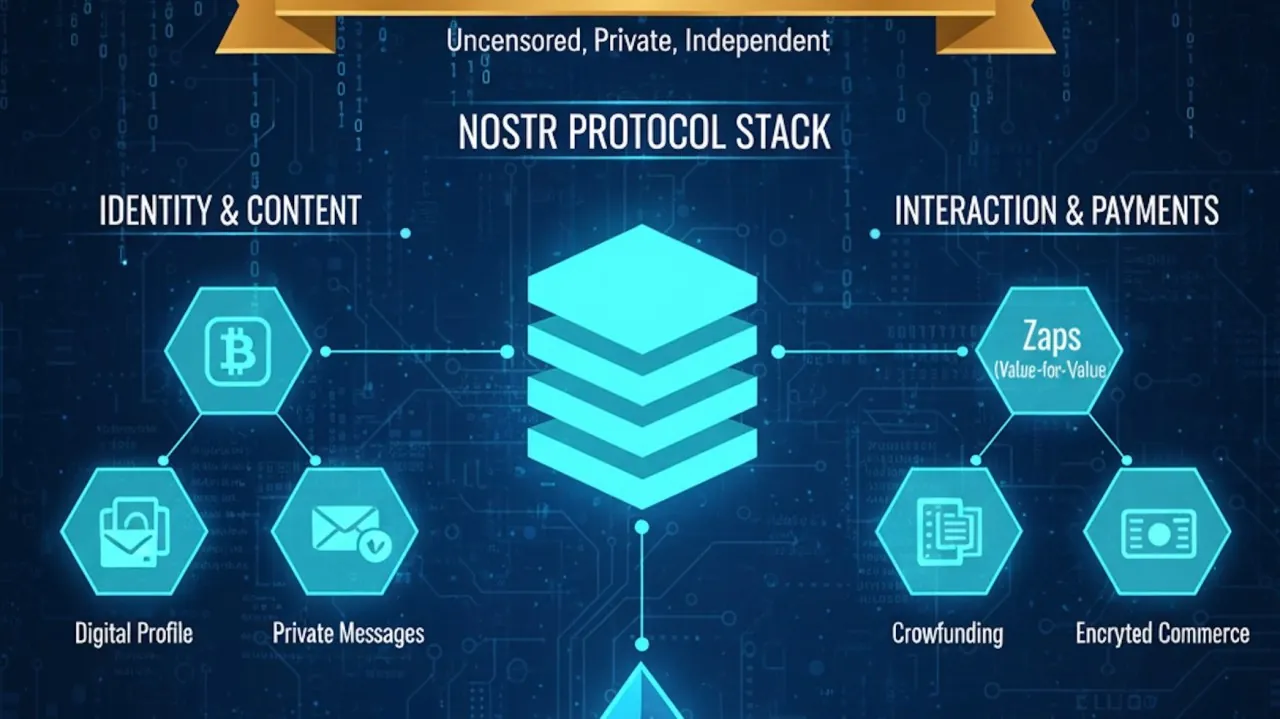
Nostr matters because it moves social identity away from one platform database and gives builders a small set of interoperable primitives: keys, signed events, relays, clients and standards.
The platform problem
The ordinary web has a platform problem. A social app can host your identity, your audience, your posts, your private messages, your media, your moderation history and your business channel in one place. That is convenient until the relationship changes. A policy change, acquisition, ban, algorithmic shift, API closure or pricing decision can reshape the audience you thought you had.
Nostr matters because it attacks that bundle at the protocol level. It does not promise that every app will be good, fair or permanent. It promises a different starting point: identity can be a public key, data can be signed events, clients can be replaceable, relays can be chosen and standards can let unrelated software speak the same language.
That is a modest claim compared with the hype around decentralization. It is also the claim that survives contact with reality. The internet does not need another platform telling users it is benevolent. It needs more layers where users and builders can leave one product without losing the whole graph.
Identity outside the app
The most important Nostr move is putting identity outside the application. A public key can be followed across clients. A private key signs events. A NIP-05 identifier can connect the key to a domain. A signer can protect the private key from every website that wants to act on the user's behalf. The client is still important, but it is no longer the sole owner of the social self.
That single shift changes the emotional meaning of switching apps. On a conventional platform, leaving can mean abandoning the audience, the posts, the reputation and the login. In Nostr, switching clients can be closer to changing the lens. The new app still has to find the right relays, render the right events and support the right NIPs, but the public identity is not born inside that app.
This is why Nostr attracts people who have felt platform risk directly: open-source developers, journalists, Bitcoin builders, creators, dissidents, educators, small communities and people who simply dislike turning every online relationship into platform property.
Competition at the client layer
Client competition becomes more interesting when the client does not own the account. A Nostr client can win by being a better reader, a better messenger, a better publishing tool, a better wallet companion, a better moderation interface or a better developer surface. It does not need to trap the user to prove value.
This is why the app ecosystem feels uneven but alive. Amethyst, Damus, noStrudel, Primal, Coracle, 0xChat, Yakihonne, Habla, Snort and many other tools can explore different product ideas against shared protocol pieces. Some are broad social clients. Some are narrow tools. Some integrate wallets. Some specialize in writing, media, communities or developer workflows.
The weakness is also visible. Interoperability is not automatic just because software says Nostr. A client can implement only part of the NIP surface. It can make poor relay choices. It can hide important security decisions. The open protocol gives room for competition; it does not eliminate the need for product judgment.
Relays make censorship harder, not impossible
Nostr is often described as censorship resistant. That phrase needs care. A relay can reject an event. A client can hide a post. Search tools can ignore a key. App stores can remove software. Hosting providers can pressure infrastructure. Spam can make public relays unusable. Social pressure can still exist. Nostr does not abolish power.
What Nostr changes is the number of places where power has to concentrate. If identity is a public key and events can be published to multiple relays, one relay's refusal does not automatically erase the user from the protocol. If clients can query different relays, one client's policy does not need to become the whole network's policy. If users can run or pay for relays, communities can choose infrastructure that fits their risk.
That is a better claim than magic uncensorability. Nostr makes censorship, lock-in and platform capture harder by moving the center away from one database. The remaining problems become operational, social and economic rather than solved by slogan.
Payments and publishing change the feel
Nostr also matters because it joins social identity to payments and publishing in a lightweight way. Zaps made Lightning payments feel native to social interaction. Nostr Wallet Connect made wallet permissions more programmable. Long-form events, highlights, comments, media metadata and file storage NIPs made publishing feel less like a timeline-only experiment.
That combination matters for creators and small communities. A writer can publish outside a single platform. A listener can zap a host. A tool can request a wallet action without becoming the wallet. A marketplace can use signed events. A conference can publish schedules and identities. A community can experiment with badges, lists and reputation without waiting for one company's roadmap.
Not every experiment will survive. Many will be awkward. But the shared identity and event layer lowers the cost of trying. Builders can compose features around keys, relays and NIPs instead of rebuilding the entire social graph for every product.
Why builders care
Builders care about Nostr because it is small enough to understand and open enough to extend. NIP-01 is not a giant platform API. The basic client-relay messages are readable. Events are structured. Signatures are explicit. New behavior can be documented in NIPs or deployed experimentally before it becomes common.
That smallness attracts hackers. It also creates mess. Standards can be draft, final, optional, deprecated or unevenly implemented. A feature can exist in one client and not another. A relay can support a subset. Libraries can disagree. Search can be hard. The standards process is public enough to inspect but not tidy enough to comfort every product manager.
For a wiki, that means the job is not to flatter the ecosystem. The job is to translate moving parts into product consequences. Which NIP matters to a reader? Which implementation exists? Which behavior is safe? Which feature is a convention rather than a guarantee? Why does one app show something another app misses?
The hard parts
The hard parts are real. Key management is unforgiving. Discovery can be weak. Spam is persistent. Private messaging has a history of older and newer standards. Relay availability shapes user experience. Media storage is not one solved layer. Moderation is distributed, which can be powerful but also confusing. Search and ranking are product surfaces, not protocol miracles.
There is also a cultural hard part. Nostr grew with heavy Bitcoin energy, open-source language and technical jokes. That gave it conviction and early builders. It can also make the first door too narrow for ordinary readers, artists, organizers, local communities or businesses that do not want to learn protocol trivia before understanding why identity portability matters.
A better Basics section has to hold both truths. Nostr is important enough to study carefully. It is also rough enough to explain honestly. Overselling it makes new users bounce. Underexplaining it makes them paste private keys into the wrong places.
The plain answer
So why does Nostr matter? Because the current web puts too much identity, distribution and economic power inside platforms. Nostr offers a small, inspectable alternative: public keys for identity, private keys for authority, signed events for data, relays for transport and storage, clients for experience, NIPs for shared behavior.
That model will not replace every platform. It does not need to. It can become a durable layer for people, apps, wallets, media, communities and tools that need portable identity and signed social data. It can make leaving easier. It can make building less dependent on permission. It can make the social web feel less rented.
The reason to keep reading is not that Nostr is perfect. It is that Nostr makes a different set of tradeoffs visible. Once you can see those tradeoffs, you can judge apps, relays, wallets, standards and communities with clearer eyes.
What is new and what is not
Nostr did not invent public-key cryptography, social networking, federation, open-source clients or distributed systems. Its importance comes from a particular combination: a small event protocol, public-key identity, replaceable relays, client competition and an unusually active culture of Bitcoin-adjacent builders. The pieces existed elsewhere. The bundle created a new surface.
That distinction keeps the story grounded. Nostr is not a miracle. It is a design choice. It says the social web can be built around signed events instead of platform accounts. It says relays can be simpler than federated social servers. It says clients can compete over the same public identity layer. It says standards can emerge around working behavior.
The result is a system that feels at once primitive and advanced. Primitive because the base protocol is small and some user experience remains rough. Advanced because the consequences of portable signed identity touch login, media, wallets, communities, search, publishing and reputation.
The business and creator angle
For creators, Nostr matters because audience portability changes leverage. A podcast host, writer, artist or educator does not have to treat a single platform as the permanent home of identity. The creator can publish through one client, receive zaps through another flow, write long-form posts elsewhere and still point back to the same public key.
For businesses, the interesting part is not "post on a decentralized Twitter." It is signed customer or member interaction, portable profiles, login without platform identity providers, relay-backed community spaces, wallet permissions, event tickets, reputation, access and product surfaces that can integrate with existing Nostr identities.
Most of that is still early. The point is that Nostr gives businesses and creators primitives that are not owned by one social network. A bad product can still fail. A careless key flow can still hurt users. But the opportunity is larger than another feed.
Why the culture matters
Nostr's culture is part of the technology story. The early network was shaped by open-source builders, Bitcoin users, privacy-minded developers, free-speech debates, hackers and creators who liked rough edges more than corporate polish. That culture made the network resilient and inventive. It also made it harder for ordinary readers to enter.
A good Basics page has to translate without sanding away the truth. The Bitcoin and Lightning connection matters. The free-speech argument matters. The annoyance with platforms matters. The developer-first language matters. But a reader does not need to adopt every cultural signal to understand the protocol.
The best future for Nostr is not a smaller club with better slogans. It is a broader ecosystem where builders can keep the sharp primitives and product teams can make them humane.
Why the next few years matter
The next phase will decide whether Nostr remains a fascinating subculture or becomes normal infrastructure. The hard work is not inventing more acronyms. It is making key management safer, relay discovery smoother, spam less exhausting, media storage clearer, private messaging more consistent and wallet permissions easier to understand.
Standards will matter, but products will matter more. A NIP can define behavior. A library can implement it. A client can make it usable. A relay can make it reliable. A community can make it meaningful. The chain breaks if any piece is treated as automatic.
That is why Crays treats Nostr as a map of people, apps, relays, wallets, media, commerce, privacy and governance rather than one explainer page. The protocol matters because it creates room for an ecosystem. The ecosystem matters because it tests whether the protocol helps real readers and builders.
Why Nostr is not only for social media
Nostr began in public conversation because social feeds are the easiest surface to understand. But the primitive is broader than posting. A signed event can represent a profile, a note, a relay list, a reaction, a long-form article, a badge, a zap request, a calendar entry, a marketplace listing, a wiki entry, a recommendation, an application handler or a wallet permission flow.
That breadth is why the protocol attracts builders from outside normal social networking. They see a public-key event layer that can connect apps without requiring one company database. The user may experience it as a feed today, but the same identity can appear in publishing, commerce, media, local communities, wallets, search, developer tools and venues.
This does not mean every use case belongs on Nostr. Some data is too private, too heavy, too regulated or too operationally specific. The point is that the base model gives builders a simple shared language for identity and signed actions. That is more interesting than a clone of any single social product.
Why the reader still needs judgment
Open protocols do not remove judgment. They move judgment closer to the user and the builder. A reader still has to ask which client is safe, which signer is trustworthy, which relay policy fits the use case, which wallet permission is acceptable and which account is actually the person it claims to be.
That can sound like extra work, and sometimes it is. But it is also the work that platforms usually do invisibly and unilaterally. Nostr makes more of those choices visible. Visibility is uncomfortable at first; later it becomes power. The reader can change clients, change relays, inspect sources, follow different people and keep the same public identity.
The fair critique is that Nostr has not made all of that easy enough. The fair answer is that ease is now a product challenge, not a reason to abandon the primitive. The ecosystem will be judged by whether it can make control understandable for ordinary people.
The open-source maintenance problem
Nostr depends heavily on open-source work. Libraries, clients, relays, signers, specifications, documentation and experiments are maintained by people with uneven funding, uneven time and different priorities. That is a strength because anyone can inspect and contribute. It is also a weakness because essential work can be under-resourced.
This matters for readers because a protocol ecosystem is not only a set of ideals. It is maintenance. Someone fixes bugs in a signer. Someone updates a relay implementation. Someone writes a NIP. Someone reviews a pull request. Someone documents a migration path. Someone pays for hosting. Someone handles spam. The visible app is only the top of the labor.
A serious Nostr wiki has to make that labor visible. The People, Funding, Apps, Relays, Wallets and NIPs areas are not separate trivia shelves. They show who is carrying the ecosystem and where the weak points still are.
Why relays change power
Relays are easy to underestimate because they sound like plumbing. In practice they are one of the places where power moves. A relay can be open or private, free or paid, permissive or moderated, short-term or archival, tiny or heavily indexed. That choice affects what a reader sees, what a community can sustain and how resilient a public identity feels.
This is different from a platform database. A platform database is usually invisible to the user and controlled by the company running the app. A Nostr relay is a visible piece of infrastructure that clients can choose, operators can specialize and communities can discuss. It can still be centralized in practice if everyone depends on the same few relays, but the protocol gives the ecosystem more room to diversify.
The reader does not need to run a relay on day one. They do need to know that relays are not neutral magic. They have policies, costs and failure modes. Understanding that one fact makes the rest of Nostr more honest. The network is not serverless. It is built from replaceable servers with different roles.
Why open social still needs business models
Nostr does not escape economics. Relays cost money. Clients need development time. Signers need security work. Wallet services need support. Media storage needs bandwidth. Indexers need infrastructure. If the ecosystem wants reliable products, someone has to pay for reliability, moderation, backups, design and maintenance.
That is why zaps, paid relays, grants, venture-backed apps, open-source sponsorships, wallet businesses and protocol-focused funds all matter. They are not side stories. They decide which tools survive past the first wave of enthusiasm. A free protocol can still produce expensive infrastructure, and a user-owned identity still needs usable products around it.
The best business models will respect the base layer. They will sell convenience, reliability, hosting, moderation, discovery, wallets, analytics, media, membership or support without pretending to own the user. The worst business models will recreate platform lock-in on top of an open protocol.
Why Nostr is hard to explain
Nostr is hard to explain because the familiar words are misleading. Account, login, server, post, handle, profile and feed all mean something slightly different. A beginner brings platform instincts, then the system asks them to think in keys, clients, relays, events and signatures. That is a real cognitive jump.
The jump is worth making because the new words reveal new choices. The app is no longer the whole account. The server is no longer the only home. The post is a signed event. The handle can be a DNS-based recognition layer rather than the identity itself. The feed is a client view over data found through relays and indexes.
A Basics page has one job here: slow the reader down just enough that the new vocabulary becomes useful instead of alienating. Once the mental model is stable, the ecosystem opens up. Without it, Nostr feels like a messy app category with too many names.