
The First Nostr Click
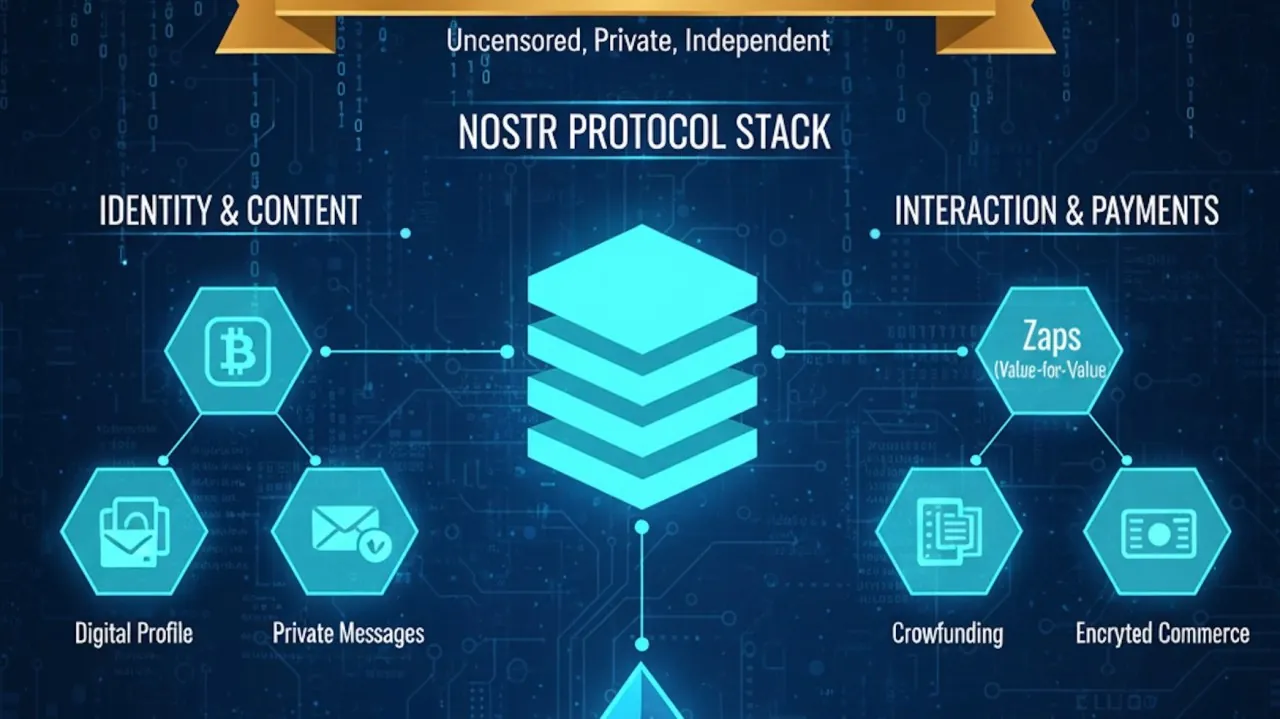
The first Nostr click is the moment a reader stops looking for the official platform and starts seeing the pieces: key, signer, client, relay, event and graph.
Why the first click feels odd
The first Nostr click feels odd because the web has trained people to expect a platform-shaped door. You click Sign up, give an email, pick a password and receive an account that lives inside the service. Nostr reverses the order. The identity can exist before the service. The client is only one place to use it. The relay is only one place to publish or read events.
That reversal is liberating once understood and irritating before it is understood. A beginner sees npub, nsec, relays, signers and zaps before the emotional promise has landed. This page is about that moment. It is the small bridge between curiosity and comprehension.
The click is not the account
When a Nostr client invites you to start, it may create a key, import a key, connect to a signer or let you browse read-only. Those are different actions. A web2 sign-up button hides identity creation inside the platform. A Nostr client has to decide how much of the key model to reveal.
A good first click makes the distinction visible. Browsing with a public key is not the same as owning a signing key. Connecting a signer is not the same as pasting an nsec. Creating a test key is not the same as building a long-term public identity. The interface that explains these differences earns trust quickly.
What the client hides
Clients hide complexity for good reasons. Nobody wants to read raw JSON before posting hello. But a client can hide too much. If it hides relays completely, users cannot understand missing events. If it hides key custody, users cannot understand risk. If it hides wallet permissions, users cannot understand money exposure.
The best clients teach without lecturing. They let the first click be simple while keeping the model reachable. They label read and write relays. They support signers. They show when an action requires a signature. They make profile, follow and zap flows feel normal without pretending the protocol is a platform account.
What the signer protects
A signer protects the beginner from the most dangerous early shortcut: raw key entry everywhere. NIP-07 signers make web clients safer by exposing a browser interface for signing. NIP-46 and Nostr Connect make remote signing possible. The user still needs to trust the signer, but the trust is concentrated in a tool built for that job.
The first Nostr click is healthier when it asks for a signature rather than a secret. That small product choice changes the whole tone. It tells the reader that the private key matters and that a client can ask for authority without swallowing the root credential.
What the relay explains
Relays explain why the first timeline can look strange. A client is not reading one universal database. It is querying relays. If those relays do not have the events you expect, the client may feel empty or broken. If they are spammy, the global feed can feel hostile. If they are slow, the app feels slow.
The beginner does not need to tune relays immediately. They do need one honest sentence: relays are where clients send and fetch signed events, and your relay set changes what you see. That one sentence saves hours of false assumptions.
What to click next
After the first click, the best next action is not more novelty. It is a small loop: follow a few real people, open the profile, inspect the key, post a harmless note, switch clients once, notice what stayed and what changed. That loop teaches the protocol better than a dozen slogans.
If the user wants a practical path, go to Getting Started. If the model still feels abstract, go to What is Nostr? If the words get loud, open the glossary. If the client choice becomes the question, go to Apps. The first click is only valuable when it points to the next understandable move.
The first good product lesson
The first good product lesson is that Nostr needs less mystique and more honest affordances. A button that says "Connect signer" teaches more than a button that hides a private-key field behind friendly copy. A relay status line teaches more than a mysterious empty feed. A profile page that shows the public key teaches more than a fake platform username.
This is where product design becomes protocol education. The interface does not need to explain Schnorr signatures or WebSocket subscriptions in the first minute. It does need to avoid lying by omission. It needs to let the reader feel the difference between identity, client and relay through normal use.
A good first click creates confidence without pretending everything is simple. It says: here is your public identity, here is how signing happens, here is where events go, here is how to leave this app without leaving yourself.
When the first click goes wrong
The first click goes wrong when a user creates a key and never backs it up. It goes wrong when a serious identity is pasted into a random web client. It goes wrong when a timeline appears empty and nobody explains relays. It goes wrong when a wallet permission sits beside a social permission as if they were the same thing.
These failures are not only user errors. They are design failures. Nostr asks more of the user than a normal social app, so the product has to carry more educational weight. The best clients reduce the amount of protocol a user must learn while protecting the parts that cannot be safely hidden.
This is why the Basics hub exists. It gives new readers enough vocabulary to diagnose the moment. Empty feed? Think relays and follows. Login prompt? Think signer and key. Payment button? Think wallet permission. Strange link? Think NIP-19 pointer.
How to turn curiosity into a real start
A real start is a small set of successful loops. Connect safely. Follow someone. Read a post. Open the same identity in another client. Publish a harmless note. Check where it appears. Look at relay settings. Add or verify a profile field. Send or receive a tiny zap only after the social flow makes sense.
Each loop teaches one piece. Client switching teaches portability. Relay checking teaches reachability. Following teaches graph. Signing teaches authority. Zapping teaches that wallet actions are separate from social identity. Together, those loops build fluency without a lecture.
The first Nostr click is not a conversion moment. It is the beginning of a new mental model. The user is learning to see the social web as keys, events, relays and clients rather than platforms, accounts, feeds and databases.
The reader test
A reader is past the first-click stage when they can answer five questions in plain language. What is my public key? Where is my private key or signer? Which client am I using? Which relays are involved? What kind of event am I creating or reading?
They do not need perfect answers. They only need enough clarity to avoid the worst mistakes and ask better questions. The rest of the archive can then become useful: People explains who shaped the ecosystem, Apps explains product choices, Relays explains infrastructure, Wallets explains payments and NIPs explains standards.
That is the point of this page. It does not make the first click flashy. It makes the first click legible.
The first hour for a reader
The first hour is not a race to post. It is a chance to understand the shape of the room. A reader can open a client, inspect how it handles keys, look at default relays, search for known people, read without connecting a wallet and notice which concepts keep appearing. That calm start avoids most avoidable mistakes.
The best first hour includes one deliberate client switch. Seeing the same public identity in another interface makes the protocol real. It also reveals that portability has degrees. Some things follow the user smoothly. Some depend on relays, NIPs or client support. That difference is education, not a defect.
The first hour also gives the reader permission to ignore most of the noise. Nostr has memes, arguments, experiments, broken tools and half-finished ideas. The useful question is not "Do I understand everything?" It is "Can I tell which layer I am looking at?"
Trust signals in the first session
In the first session, trust comes from small signals. A known domain in a NIP-05 name can help. A profile linked from a personal website can help. A GitHub account connected to a developer can help. Posts referenced from multiple clients can help. A long history of replies, zaps and mentions can help.
None of these signals is magic. A domain can be lost. A key can be compromised. A famous avatar can be copied. A client can display something poorly. But a bundle of signals is stronger than one badge. Nostr asks readers to think in bundles of evidence rather than platform-issued certainty.
This is especially important for new users following prominent builders, wallet teams, funders or media accounts. The cost of following a fake account may be annoyance. The cost of trusting a fake wallet prompt can be money. The interface has to make that distinction obvious.
Why bad onboarding feels like bad protocol
Bad onboarding often gets blamed on the protocol because the user experiences only the product. If a client hides relay state, the user thinks Nostr is empty. If a client asks for a private key casually, the user thinks Nostr is unsafe. If a client renders links poorly, the user thinks Nostr is incoherent.
This is unfair to the protocol and fair to the user. The user does not owe the ecosystem patience. Builders have to turn protocol choices into humane product choices. That means safer defaults, shorter copy, clearer error states, visible relay health and honest language around signing and wallets.
The first click therefore becomes a test of the whole ecosystem. It asks whether Nostr can make powerful primitives feel understandable without making them fake.
The moment the model clicks
For many people, the model clicks when they realize a client is not the account. The account-shaped thing is the key. The client is a window and tool. The relays are places the window asks for data. The event is the signed object moving through the system.
After that moment, many odd details become less odd. NIP-19 links are pointers. NIP-05 names are recognition helpers. Signers are key protection tools. Relay lists are reachability hints. Zaps are payment flows connected to events. NIPs are shared behavior notes for implementers.
That click is what the Basics route is built to create. It does not need hype. It needs a clean sequence of ideas.
The empty feed problem
The empty feed is one of the most common first-session failures. A user opens a client, sees little or nothing and assumes the network is dead. In reality, the client may not know which relays to ask, may not have a follow graph yet, may be connected to quiet relays or may be hiding data it cannot interpret.
A good client explains this without making the reader feel foolish. It can show relay connection state, suggest a small set of starter follows, let the user search known people and make the difference between global discovery and personal timeline visible. The empty feed is a teaching moment if the product treats it as one.
The reader can respond with a simple sequence: follow a few trusted accounts, check relay settings, open the same profile in a second client, search by npub or NIP-05 name and look at whether the missing data is a relay problem or a graph problem.
The safe signer moment
The safest first click often involves a signer rather than pasting a private key into a random web page. NIP-07 browser signers and mobile signing flows are important because they let a client request signatures without taking custody of the raw secret in the same way a naive import does.
This is not a magic shield. A signer can still be badly designed, over-permissive or confusing. The user still needs to notice what is being signed and which app is asking. But the separation changes the risk shape. It gives the ecosystem a way to make web clients more useful without training users to paste secrets everywhere.
A beginner does not need to know the inner details of every signer. They need the habit: protect the private key, prefer permissioned signing, use test keys for unknown tools and slow down when a prompt asks for more than public identity.
When to open the NIPs shelf
The NIPs shelf becomes useful after the first mental model is stable. If a reader opens NIP-01 before understanding clients and relays, the document feels like a wall of messages and filters. If they open it after seeing a client fetch events, it becomes a readable description of what just happened.
The same is true for NIP-05, NIP-07, NIP-19, NIP-44, NIP-46, NIP-57 and NIP-65. These are not abstract badges. They explain visible product behavior: names, signers, links, encryption, remote signing, zaps and relay lists. The reader should use NIPs as answers to concrete product questions.
That timing matters. Basics comes first, then NIPs. The goal is not to turn every reader into a protocol maintainer. The goal is to let non-developers understand why apps behave differently and why standards affect safety, portability and product polish.
Why one small zap can wait
Zaps are one of the most delightful parts of Nostr, but they do not belong in the first minute for every reader. A zap touches social identity, Lightning invoices, wallet setup, client support and sometimes Nostr Wallet Connect. That is a lot of machinery behind one friendly button.
The better first path is to understand identity and publishing before payments. Once the reader knows which key they use, which client they trust and what a signed event means, a tiny zap becomes a learning loop rather than a confusing payment experiment.
This is not anti-zap. It is pro-context. Social money works better when the user can tell the difference between liking, reacting, tipping, authorizing a wallet and signing a public event.
What a reader can ignore at first
A new reader can ignore most protocol debates at first. They do not need to understand every event kind, every relay policy, every encryption migration, every app rivalry or every historical argument. Too much context too early makes Nostr feel like homework.
They can focus on five moves: protect the key, use a decent client, follow real people, understand relays at a basic level and learn why NIP pages exist. That is enough to read the rest of the ecosystem with patience.
The deeper archive is still there. It becomes valuable once the reader has questions of their own. Why are DMs changing? Why do some links fail? Why does one client see an article and another does not? Why do relays ask for payment? Each question opens the next shelf.
A first-session checklist that actually helps
A useful first-session checklist is short. Can you find your public key? Do you know where your private key or signer is? Can you follow one known person? Can you publish one harmless note? Can you open that note in another client or link format? Can you see which relays the client is using?
If the answer is yes to most of those questions, the first session has done its job. The reader does not need to master every feature. They need a few stable handles on the system. Those handles make later complexity less frustrating.
This checklist also protects the reader from a common trap: chasing novelty before understanding the base. Nostr has many interesting corners, but the first hour belongs to identity, signing, relays and one small publishing loop.
How support questions get better
A new user often begins with broad questions: "Why is Nostr broken?" or "Why is my post gone?" After a good first click, the questions become more useful. "Which relay has this event?" "Does this client support this event kind?" "Am I using a signer or importing a key?" "Is this a wallet permission or a social signature?"
Those questions are better because they name the layer. They help other people answer without guessing. They also help builders see where a product needs clearer messages. A vague complaint becomes a bug report, documentation gap or onboarding fix.
That is one quiet benefit of a real Basics route. It improves the language of the whole community. Better language means less blame, faster help and fewer users leaving because the first problem felt impossible to diagnose.
What the first click teaches about control
The first click teaches that control is not a slogan. It is a set of small responsibilities. The user controls a key or delegates signing. The client controls presentation. The relay controls storage and policy. The wallet controls money. The reader has to know which control surface is in front of them.
That can feel like more work than a normal app, and at first it is. But the reward is that control is no longer hidden inside one account provider. A user can change the client, inspect the relay path, protect the key better, refuse a wallet permission or move to a different social surface.
The first click is successful when the user feels that shift without being overwhelmed by it. They do not need mastery. They need enough clarity to make the second click safer than the first.