

Crays Coffee
We use the Coffee layer as the daily handshake of the ecosystem: a neighborhood cup, a fast counter, a stamp, a wallet, a preorder flow and enough local warmth to make the bigger Crays story feel less abstract.
The morning ritual is the proof
Coffee looks small beside clubs, resorts, capital vehicles and open protocol infrastructure. That is exactly why it deserves a serious read. Big ecosystem claims are easy to make from a distance. A morning counter is harder. You either get the cup right or you do not. You either move the queue or you do not. You either feel like a neighborhood place or you feel like a concept store trying to sell a lifestyle before it has earned your trust.
For us, coffee is not a side decoration. It is the lowest-friction proof that we can enter your day without making everything grand. You do not need to be an investor, founder, club member or resort guest to understand a coffee node. You walk in, order, maybe scan a wallet QR, collect a stamp, talk to someone, sit for ten minutes, come back tomorrow. If that loop works, the ecosystem becomes less theoretical.
The official Coffee language goes straight at this: Life Among People, coffee as catalyst, warm streets, familiar faces, quick service, balanced cups and neighborhood rhythm. There is no need to overcomplicate that. The small ritual matters because repeated ordinary contact can do more for trust than one spectacular event. A good member network is not built only at galas. It is built in morning habits, casual introductions, regular faces and places where you can show up without a pitch deck.
That makes the coffee layer a different kind of Crays node. The Club layer is curated and more selective. The World layer is about venues, stays and local infrastructure. The Fund layer speaks to capital. The Award layer speaks to culture and attention. Coffee speaks to repetition. It asks: can we make a place you can use three times a week? Can we make the Crays app useful before you care about the whole network? Can we make local presence feel warm instead of corporate?
There is a strategic reason to start small. If someone uses a stamp card, gift card or preorder flow, you can teach them the identity layer without lecturing. If a regular sees a small event nearby, the app becomes useful. If a coffee node recognizes a member or visitor with consent, the Crays profile starts to feel like continuity. If the counter accepts a wallet flow cleanly, payments feel natural. If none of that works at coffee scale, the bigger claims around clubs and hospitality need to slow down.
Coffee also creates a different emotional tone. A fund can feel abstract. A club can feel intimidating. A resort can feel occasional. Coffee feels everyday. That everyday mood is valuable because we need more than impressive assets. We need a social temperature. We need places where people are allowed to be informal, where small conversations happen, where a founder can meet a local operator without a staged introduction, where a creator can bump into a supporter, where the brand is not always wearing a suit.
So the real question is not whether a coffee page fits the ecosystem. The real question is whether the ecosystem can respect something this small. If we overload it with badges, feeds, rewards and claims, we ruin the point. If we let the coffee be coffee first, the digital layer can quietly prove that Crays knows how to make technology disappear into a good habit.
Barrio beats platform language
The Coffee page uses barrio, and that word does important work. It moves the idea away from generic global luxury and closer to neighborhood life. A barrio is not a market segment. It is a lived place with regulars, corners, light, staff, suppliers, local jokes, weather, morning timing and faces you start to recognize. That is the level at which coffee becomes credible.
Platform language can flatten places. It makes every location sound like a node, every customer a user, every visit a conversion and every habit a retention loop. Some of that language is useful behind the scenes. It is poisonous at the counter. You do not walk into a barrio coffee shop wanting to feel onboarded. You want a good cup, a person who remembers enough, a place where you can wait, work, meet or leave without friction.
That is why the Coffee layer should protect local texture. If a shop sits in Palma, Portixol, Santa Catalina, Deia, Soller, Pollensa, Andratx or any other Balearic context, it should not feel like a copy-pasted brand tile. The point is not to erase local identity under Crays red. The point is to add a recognizable layer of quality, hospitality and digital continuity to places that still feel attached to their streets.
Barrio also changes how we think about community. A community is not only a list of members. It is a set of repeated encounters. You see the same barista. You notice the same remote worker in the corner. You meet someone because the queue is slow for thirty seconds. You learn which time is quiet. You discover a local event from a small card or app prompt. You return because the place has become part of your route. That kind of community is humble, but strong.
The Crays map benefits from that humility. A global ecosystem can get self-important fast. Coffee pulls it back to the ground. It says: before we talk about tokenized brand structures, venture routes, Super Nodes or governance, can we make your morning better? Can we show you that a Crays place can be human before it is ambitious? Can we let you enter the network through a cup instead of a manifesto?
Handled well, a coffee node becomes a soft bridge between locals and travelers. A local person should not feel that the room has been taken over by transient status. A traveling member should not feel isolated from the neighborhood. Coffee can carry both if the service model is respectful: local hiring, local suppliers where possible, clear pricing, relaxed seating, real hospitality, events that fit the area and digital tools that support the room rather than dominate it.
That barrio logic also connects to the wider Crays venue vision. A Club can be selective. A World venue can be premium. A Coffee node can be open enough to let people approach. It becomes the front porch of the ecosystem. You can walk in with curiosity, not commitment. You can test the feel. You can collect a stamp. You can see whether the brand has manners. For many people, that will matter more than any hero section.
The stamp card is a quiet identity product
A digital stamp card sounds basic. That is why it is perfect. The official Coffee flow says buy six coffees and get the seventh free. No manifesto needed. You understand the value in one second. You also get a clean test of the identity layer: can the system remember a useful customer state without making the experience heavier than a paper card?
This is where small products teach big habits. A stamp is a tiny credential. It says: this profile has returned, this purchase counted, this reward is available. That does not need to become financial theater. It needs to be reliable, understandable and easy to redeem. If the stamp card fails, people will not trust more complex membership, access or wallet flows. If it works, they learn that a Crays identity can carry small useful memory.
The stamp card is also emotionally different from a generic loyalty program. A good stamp card feels local and friendly. It says someone noticed you came back. A bad one feels like a tracking device. The difference is language, consent and restraint. You should know what is counted, where it is stored, how it is redeemed and whether it follows you across locations. You should not feel that buying a cappuccino created a dossier.
Nostr can support this pattern if it is used carefully. A purchase does not need to be broadcast publicly. A reward proof can be private or local. A profile can carry enough identity to prevent duplicate friction without exposing everything. A badge-like signal can show regular status if the user chooses. A zap can reward a creator event or staff-led moment if the context is right. But the default should be quiet. Coffee is not the place to force radical transparency.
The stamp card also bridges online and offline behavior. You can discover the offer on the site, hold the wallet in the app, scan at the counter, collect the stamp, redeem later and maybe receive a local event invitation. That flow is a miniature version of the wider Crays promise: your identity moves through a place, value is recognized, and the room becomes easier to use next time.
The risk is gimmickry. If the stamp card becomes a noisy game, it cheapens the brand. If it becomes too hidden, it loses charm. The right level is simple: visible enough to motivate return, subtle enough not to dominate the ritual. The coffee should remain the reason. The reward should be a small nod.
For operators, the stamp card can become useful data without becoming invasive. Repeat rate, redemption behavior, location demand, time-of-day patterns and local campaign response can all help plan staffing, inventory and events. The ethical line is simple: use the data to improve the place, not to manipulate the person. If the coffee gets faster, the offers get more relevant and the events get better, the loop earns trust.
Wallet, gift cards and preorder make the commerce layer visible
The Coffee site exposes more than a menu. It points to wallet, gift cards and preorder behavior. Those are small commerce rails, and they matter because they show how the everyday layer can connect to the rest of the Crays stack. A wallet QR at coffee scale is not about making the counter futuristic. It is about testing whether payments, stored value and repeat use can stay light.
Preorder is a very practical feature. If you know the location, your drink and your timing, the app can save minutes. In a hospitality ecosystem, minutes are not trivial. They determine whether the morning feels smooth. They determine whether staff can handle demand. They determine whether the tech layer earns its place. A preorder flow that fails during rush hour is worse than no preorder at all.
Gift cards add another layer. They let coffee become social currency: a small thank-you, a local welcome, a way to bring someone into the brand without asking them to join anything. Inside the Crays ecosystem, a gift card can also be a gentle invitation. You do not start by selling membership. You give someone a cup. If the experience is good, the next step becomes natural.
A wallet flow can support several kinds of value: stored coffee credit, gift card balance, Lightning payment, reward redemption, membership perk or event access. The important thing is to keep those categories clear. If a customer cannot tell whether they are paying, redeeming, receiving a gift or using a reward, the interface has failed. Good commerce design is explicit without being heavy.
NIP-47 style wallet connections are useful in this context because they can let a user authorize payments from a wallet without handing full custody to the venue. For a normal coffee purchase, most people will not care about protocol names. They care that payment is fast, secure, understandable and easy to stop. The open standard matters behind the scenes because it helps avoid another closed wallet trapped inside one brand.
Zaps can also fit, but only in the right moments. A normal coffee order does not need a public zap. A creator session, barista competition, local music morning, award-related event or neighborhood fundraiser might. The difference is meaning. If a payment is only settlement, keep it quiet. If a payment is also a social signal, let the user choose whether it becomes visible.
The Coffee layer can teach the rest of Crays a basic commerce rule: everyday payments need fewer ideas, not more. The experience should support card, wallet, gift, reward and preorder without turning the counter into a decision tree. The product surface can hide complexity until the user asks for it. That is how open rails become normal.
There is also a trust advantage in low-value repetition. People may hesitate to connect a wallet to a luxury resort flow first. They may be willing to try it for coffee. If the first experience is clear, reversible and useful, confidence grows. The small purchase becomes a test of the bigger relationship.
Nostr belongs here only when it makes the queue easier
Coffee is a ruthless product environment for technology. Nobody wants to wait while a protocol proves a point. If the line is moving, the system is allowed to exist. If the line slows down, the system is in the way. That makes the Coffee layer an excellent test for whether our Nostr thinking is practical.
The useful jobs are clear. NIP-05 style identifiers can help connect a human-readable profile to a public key. Signer-based login can let you use the wallet or stamp card without surrendering private keys. NIP-47 wallet connections can authorize payments or limits. NIP-57 zaps can support creator moments. NIP-58 style badges can express regular status, staff role, local membership or event access. Local relay behavior can keep venue context close to the place instead of pushing everything into a global feed.
But every one of those jobs has to pass the coffee test. Does it make ordering faster? Does it make rewards clearer? Does it reduce account clutter? Does it help staff recognize the right permission? Does it protect privacy? Does it help you move from coffee to a Club event or World venue without repeating yourself? If the answer is no, the feature should wait.
A coffee node does not need to publish your daily latte as a public event. It might need to record a private stamp. It might need to verify a membership perk. It might need to show that a local event is open to your role. It might need to let you pay from a wallet. It might need to prove that a gift card belongs to you. The subtlety is the point. Open protocols are valuable when they give you more control, not when they make every tiny action public.
The identity layer should also respect people who are not yet part of the ecosystem. You should be able to buy coffee like a normal person. You should not be forced into a profile before the first cup. A Crays-aware flow can offer extra continuity to those who want it: stamps, rewards, wallet, events, local discovery. It should not punish someone who simply wants espresso.
That consent boundary matters because coffee is often a public, casual, mixed audience environment. Locals, tourists, members, staff, creators and friends all share the same counter. The digital layer needs to understand different privacy expectations. A member may want personalized perks. Someone dropping in for one espresso may want anonymity. A creator may want public zaps for an event. A staff member may need operational tools. One interface cannot assume one identity mood for everyone.
The best Nostr implementation at coffee scale will feel almost boring. You log in with a signer if you want. You see your stamp card. You use a wallet if you choose. You can follow the local node. You can discover an event. You can pay. You can leave. The protocol does not demand attention. The place gets better. That is the bar.
A small coffee node is harder than it looks
A coffee shop looks simpler than a club, but operationally it is unforgiving. The margins are tighter, the rhythm is faster, the staff load is constant and the customer expectation is immediate. If a club has a rough ten minutes, people may forgive it because the evening is long. If coffee has a rough ten minutes, the line leaves.
That matters for the Crays hospitality thesis. A small node forces discipline. You need equipment, training, inventory, milk quality, grinder settings, cleaning rhythm, staff scheduling, supplier relationships, menu clarity, queue design, seating logic, music, lighting, payment speed, reward redemption and local marketing. Then you need to make all of that repeatable without draining the character out of the place.
Eversys and Ubermilk are operational choices, not just brand names. They suggest that the coffee layer is designed for consistency at speed. That does not remove the need for staff craft. It changes where craft lives. The team can focus more on hospitality, pacing, micro-interactions and local culture if the equipment handles repeatability. For a network of nodes, that is useful. Consistency is what lets you trust a Crays cup in more than one location.
Location selection is another reality check. A good coffee node needs foot traffic, visibility, morning demand, neighborhood fit, staff access, delivery practicality, licensing, landlord stability and enough seating behavior to support both quick take-away and lingering. If the place is too hidden, discovery suffers. If it is too tourist-heavy, local rhythm may weaken. If it is too cramped, the app cannot create hospitality out of thin air.
The operator also has to decide what the node is for. Is it a quick counter, a small lounge, a creator corner, a member soft-entry, a neighborhood cafe, a coffee cart inside a larger venue, a Club lobby, a hotel node or a seasonal beach-side point? Each format has different economics. The brand can unify them, but the operating model must fit the format.
Data can help operators if it stays practical. Preorder demand can show staffing peaks. Stamp redemption can show repeat behavior. Gift card use can show social acquisition. Wallet adoption can show payment preference. Local event clicks can show community interest. None of this should become a vanity dashboard. It should answer boring questions: how many people return, what slows the queue, which location needs more staff, which offer drives genuine visits, which event converts into repeat customers?
There is also a quality-control issue. If Coffee becomes a repeated entry point into Crays, weak locations damage trust quickly. A bad cup is not small when it is someone's first contact with the ecosystem. The standard needs to cover taste, service, cleanliness, speed, design, digital flow and complaint handling. The Association and operator layers should treat coffee quality as brand infrastructure, not a side hustle.
The good news is that coffee gives feedback fast. You do not need a year to know whether people return. The counter tells you. The stamp card tells you. The morning rush tells you. The local chatter tells you. If we listen to those signals, we can use Coffee as the most honest lab in the Crays ecosystem.
One cup can open the next door
The Coffee layer should not behave like a funnel, but it can become a gentle first step. A funnel pushes you. A good neighborhood node gives you a reason to move when the next step is actually relevant. That difference matters. If you buy a flat white in the morning, the app should not immediately shove club membership, fund access and three brand stories into your face. It should wait for context.
Context might be simple. You collect enough stamps and the shop invites you to a small local tasting. You preorder from the same barrio for two weeks and see a quiet coworking morning nearby. You follow a creator who is playing at a Club event. You receive a gift card from someone already inside the network. You meet a host who can explain the Club room because you asked, not because a banner chased you. Each move feels human because it starts from your behavior, not from a marketing calendar.
This is where Coffee can connect the rest of Crays without becoming heavy. The Club layer offers deeper rooms. The World layer offers venues and destinations. The Award layer offers culture and creator recognition. Crays.net and Circle offer the product surface. The Association gives standards. The wallet and Nostr layers give continuity. Coffee can point toward all of that, but only when the relationship is ready.
A good example is a local creator morning. You buy coffee, see a small event card, join through your profile, pay or reserve through the wallet, receive a stamp, maybe zap the creator after the session, and later see that the same creator is part of an Award route or Club evening. That is an ecosystem moment. It did not start with a pitch. It started with a cup and a real person.
The same logic can help travelers. You arrive in Mallorca, find a Coffee node, use your Crays identity, discover a nearby Club or World venue and understand the local map without downloading five apps. The coffee shop becomes the first place where the city recognizes you. Not in a creepy way. In a practical way: you can pay, collect, ask, discover, sit and decide what comes next.
Operators should care because this creates demand that is softer and more believable than ads. A local coffee habit can feed events. Events can feed Club interest. Club interest can feed venue stays. Venue stays can feed partnerships. The chain only works if each step is valuable by itself. Coffee must not become a billboard. It has to remain a place you would choose even if the rest of the ecosystem disappeared for a day.
Coffee keeps the ecosystem human
A serious ecosystem needs soft moments. The Award route brings culture and attention. The Club layer brings private rooms. The World layer brings destinations. The Fund layer brings capital. Coffee brings ordinary repetition. It is the part that says you do not always need a big reason to enter Crays. Sometimes you just need a place to sit.
That softness is not weakness. It is how networks breathe. People build trust through repeated low-pressure contact. The same person who would never attend a formal investor dinner might become a useful local connector after three casual mornings. A creator might meet a supporter at the counter. A founder might overhear an event, ask a question and enter the room without pressure. A regular might become a member because the brand already feels familiar.
Coffee also keeps the aesthetic honest. A lifestyle ecosystem can become too polished, too black, too exclusive, too self-conscious. A coffee cup cuts through that. If the place is warm, useful and easy, the brand feels less staged. If it tries too hard, people notice immediately. The coffee layer should be cool because it is alive, not because it screams premium.
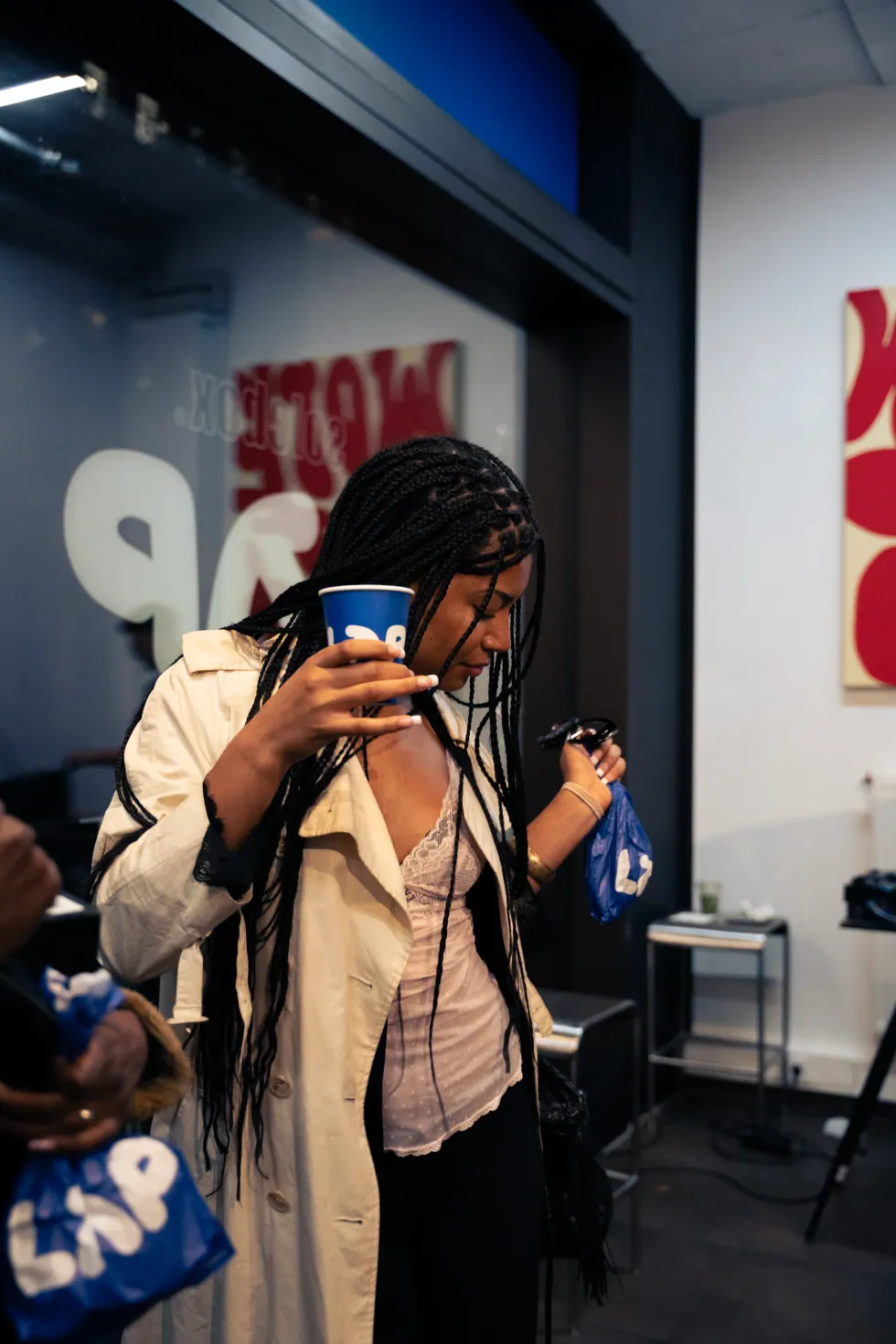
Our Coffee catalyst visuals point in that direction: cups, stores, culture, street energy, everyday design. The mockup coffee cup in the hub works because it gives the ecosystem a tactile object. You can imagine holding it. That is important. We need physical anchors you can remember, not only abstract pillars. Coffee is one of those anchors.
Culture also means the node can host small moments. A morning creator drop. A local business breakfast. A neighborhood tasting. A pre-event meet-up before a Club night. A quiet hour for remote workers. A pop-up with a local designer. A micro-award or fan vote moment tied to Crays Award. These are not huge productions. They are small reasons for people to meet. Coffee is good at that because it lowers the stakes.
There is a discipline here too. Not every coffee node should become an event venue. Sometimes the best cultural decision is to keep the place calm. The operator has to read the neighborhood. Some mornings need energy. Some afternoons need focus. Some locations can carry creator programming. Others should stay simple. A network that respects local rhythm will feel much more credible than one that forces every place into the same activation calendar.
The wider ecosystem benefits when Coffee works because the ladder becomes gentler. You can move from coffee to app, from app to local event, from event to Club, from Club to World venue, from venue to deeper membership or partnership. The movement should feel like curiosity, not a funnel. Coffee is the first yes.
What you should check in a real location
If you visit a Crays Coffee node, start with the basics. Is the coffee good enough to repeat? Is the queue clear? Are prices visible? Does the staff move confidently? Does the room feel local? Are there regulars? Can you sit without feeling pushed out? Is the app helpful or distracting? Does the wallet flow make sense? Does the stamp card redeem cleanly?
Then check the digital layer. Can you use the stamp card without confusion? Do you understand what data is stored? Can you pay in a way that feels normal? Does preorder save time? Are gift cards easy to send and redeem? If Nostr identity is involved, do you know what you sign? Can you disconnect? Are public and private signals separated? Does the experience work for someone who does not care about Nostr yet?
Check the local connection. Does the shop feel like it belongs in the barrio? Are the events relevant? Do the visuals, music and staff energy fit the location? Does the place attract a mix of locals and travelers? Does it create conversations without forcing them? A coffee node should not feel like a showroom for a global network. It should feel like a neighborhood place with better rails.
Check operational honesty. Are rush periods handled well? Is the equipment helping or hiding staff gaps? Are milk drinks consistent? Are tables clean? Is seating realistic for the claimed use case? Does the staff understand wallet, stamps and gift cards well enough to help without embarrassment? Small frictions reveal whether the system is ready.
Finally, check whether you want to come back. That is the entire point. If the coffee layer gives you a warmer morning and a little more continuity, it belongs in the ecosystem. If it only adds branding to a generic cafe, it does not. We become real through repetition, and coffee is where repetition either happens or quietly refuses to happen.
Sources worth opening
Use these sources to check the public Coffee pages, adjacent hospitality context and the open standards behind wallet, zap, badge and identity behavior.