
Crays Hospitality
We use hospitality as the front door to the ecosystem. If you can sit down, order, pay, meet, work, recover, create and come back without friction, the technology underneath has done its job.
The room is where the stack gets judged
You do not experience a network as a diagram. You experience it when a door opens, when the person at the desk knows what kind of access you have, when your coffee order does not become a small admin project, when a dinner introduces you to people worth meeting, when the payment works, when the room feels safe, when the venue remembers enough to be useful and forgets enough to be respectful.
That is why hospitality sits so close to the center of the Crays story. We can talk about Nostr keys, Super Nodes, association governance, real estate vehicles, wallet connections and creator economics all day. The test is simpler. Can we make a place feel alive without turning it into a closed platform? Can you move through a club, coffee node, lounge, hotel, rooftop, retreat, event space or partner venue with your identity intact and your day getting easier?
The official Hospitality route names the physical modules that matter: clubs, hotels, lounges, retreats, events, member moments, coffee, coworking, health, food, retail, creator spaces and living. That list can sound like lifestyle packaging if you read it quickly. Read it slower and it becomes an operating map. Every module is a reason to arrive, stay longer, spend, return, invite someone or create proof of demand.
For you, the most useful question is not whether the concept looks premium. The useful question is whether the place lowers friction at the moments where good hospitality normally breaks: arrival, recognition, access, ordering, payment, reservation changes, privacy, staff handover, refunds, local recommendations, event entry, membership status, guest privileges and the end of the stay. If those moments are calm, the technology is doing quiet work. If they are messy, no amount of Web5 language saves the room.
This is the difference between a hospitality brand with an app and an ecosystem that uses hospitality as a real interface. In a normal venue, your profile usually belongs to a booking system, a payment processor, a loyalty program, a CRM, a newsletter list and maybe a staff notebook. In the Crays version, those fragments need to become a portable guest relationship without making you feel watched. Nostr matters here because it gives us a way to think about identity, signatures, public proof and portable context without forcing every venue into one centralized account silo.
Hospitality is also emotionally unforgiving. People forgive a rough white paper. They do not forgive bad service when they are tired, hungry, late or trying to host someone important. That is why this layer cannot be written as a feature list. It has to be written from the room outward. What does the guest feel? What does the operator see? What does the staff need? What does the member carry? What does the investor measure? What does the protocol actually improve?
Palma shows the flagship logic
The Palma club material is important because it gives the hospitality layer a physical shape. The public Club route describes a private member and club layer, and the Palma concept gives it scale: a first phase around 1015 square meters with store, lounge, coworking and terrace, a second phase of roughly 1000 square meters with pool, spa and health, plus the idea of up to 60 living rooms. That is not a small lounge with a logo on the wall. It is an attempt to compress work, social life, recovery, food, retail, events and stay logic into one connected place.
That kind of density matters. A simple cafe gives you one reason to return. A great club gives you several. A member can work in the morning, take meetings after lunch, meet a founder in the lounge, use wellness in the afternoon, invite someone to dinner, attend a creator event at night and stay near the network if the living layer is active. The day becomes longer because the place contains more useful transitions.
The trap is obvious: density can become confusion. When a venue tries to be everything, the guest can feel the seams. You walk from one business model into another, repeat your name, scan another code, explain your access again, pay in another system and wonder which rules apply. The Crays hospitality work has to make the density feel like one place. That means one membership logic, one respectful identity surface, clear staff roles, simple booking, readable payments and an atmosphere that does not feel like a trade fair of separate products.
Palma also shows why hospitality cannot be separated from real estate. A room has rent, capex, licenses, staff, suppliers, cleaning, maintenance, sound, security, insurance, taxes and local politics. A 2000-square-meter hospitality concept is not only a brand statement. It is an operating machine with a capital structure behind it. That is why Finance, Real Estate and Hospitality need to speak to each other. The venue has to be beautiful enough to create demand, disciplined enough to operate, and transparent enough to finance without selling dreams as proof.
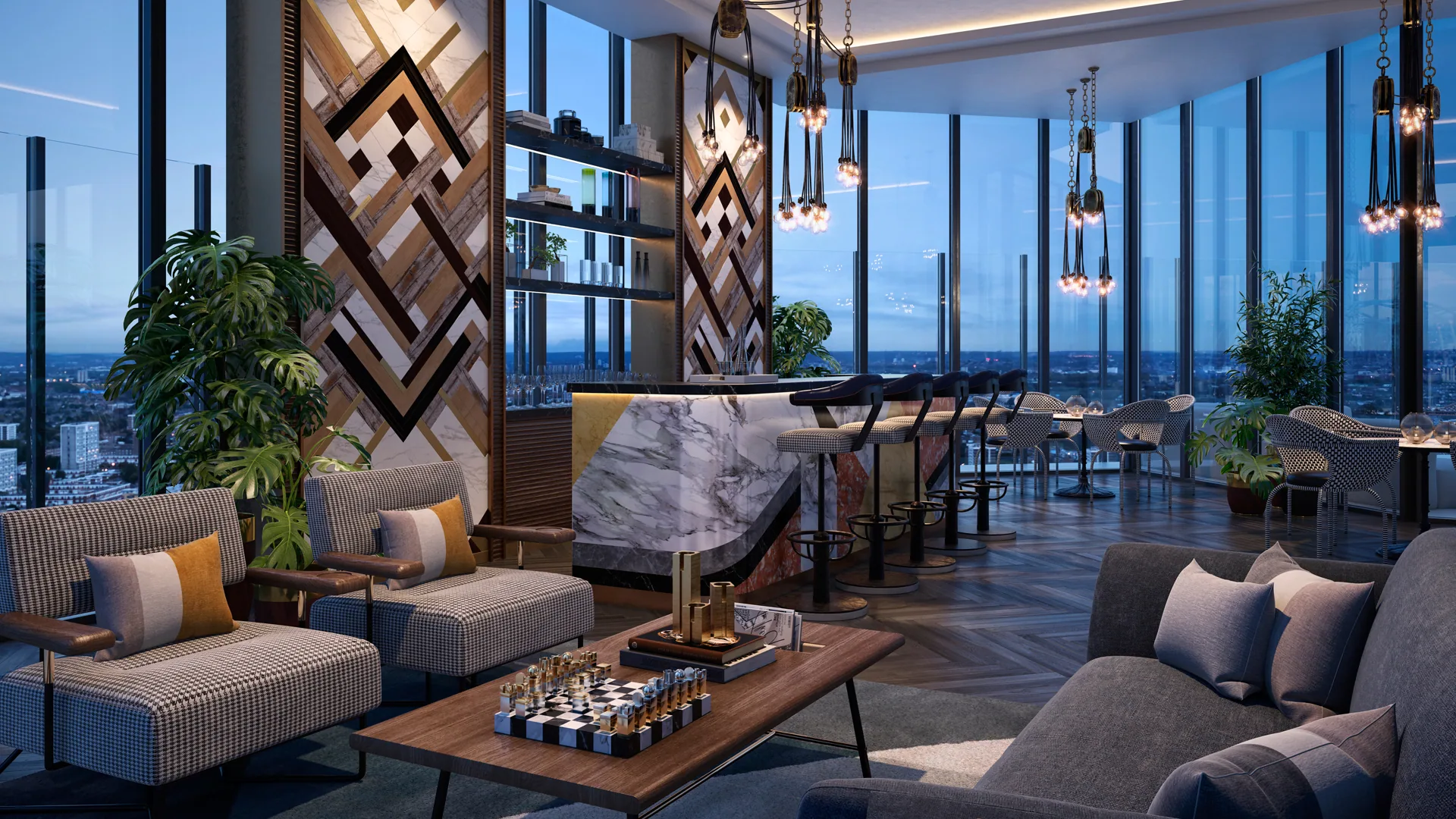
When you read the Palma idea, look for the operating thesis inside the lifestyle language. Store and retail can create product revenue and brand touchpoints. Coworking can produce daily usage and professional density. Lounge can create relationship value. Terrace and F&B can convert attention into time and spend. Pool, spa and health can expand the day from business into recovery. Rooms can turn a visit into a stay. Events can turn local community into public culture. Each module is a different revenue rhythm, and each rhythm needs its own staff, margin, data and guest promise.
The real product is one useful day
The best way to understand the hospitality layer is to walk one day. You arrive in a city. You open the Crays surface because you want a place where you can work, meet people, order quickly, maybe stay later and feel that you are not starting from zero. Your identity should not be a heavy thing. It should be enough to show membership, access, preferences, bookings, status, trusted introductions and payment permissions where you choose to use them.
At the door, the venue does not need your entire life. It needs the right proof for that moment: booked guest, member, invited guest, event attendee, room guest, operator, creator, investor meeting, staff, partner, supplier. Nostr-style identity is useful when it lets the venue verify a claim without pulling everything into one platform account. The public key becomes a portable anchor. The venue still needs service judgment, but the identity handshake can become cleaner.
Once inside, the day breaks into small decisions. Where do you sit? Who is here? Can you book a quiet room? Can you invite someone? Can you order without waiting? Can staff see enough context to help without reading your entire profile? Can you pay from a wallet or card without confusion? Can you collect a reward without thinking about it? Can a creator unlock a space or content flow? Can a local operator update the venue surface without calling a software agency?
That is where hospitality becomes the most honest product research we have. If people actually use the room, the data will show repeat behavior, bookings, payments, event attendance, spend, referrals, loyalty redemption, direct demand and friction points. If they only like the idea on a landing page, the room will show that too. A physical place does not let the story hide forever.
We should treat the guest day as a chain, not as isolated features. Arrival connects to access. Access connects to identity. Identity connects to staff confidence. Staff confidence connects to service speed. Service speed connects to spend. Spend connects to payment and receipts. Receipts connect to rewards. Rewards connect to return visits. Return visits create demand. Demand supports the operator and, in the right structures, the asset layer. The chain matters because one broken link can make the rest feel theoretical.
That is why the Hospitality route needs a different language from a tech page. You should not have to know what a relay is to understand the value. You should be able to say: I can carry my identity, my access and my useful context across Crays places without handing my whole life to every venue. I can pay, book, join and return with less friction. I can meet people in rooms that have taste, standards and local knowledge. That is the product.
Coffee makes the network local
Coffee is the smallest credible hospitality unit in the Crays map. That is why it matters more than it looks. A club can feel exclusive. A fund can feel abstract. A Super Node can sound technical. Coffee is simple. You walk in, order, pay, sit, talk, leave and maybe come back tomorrow. If we cannot make that small loop feel better, we have no right to claim the bigger hospitality loop will work.
The public Coffee route already points in the right direction. It frames coffee as a catalyst, not as decoration. It talks about local roasting, fast service, rewards, gift cards, preorder and a digital stamp card where buying six coffees makes the seventh a reward. That is not deep finance. It is behavioral infrastructure. It teaches the app how a person returns. It teaches the venue which moments create loyalty. It gives the member a daily reason to use the network without making every interaction feel grand.
Coffee also makes identity less intimidating. A wallet-linked reward at a coffee counter is easier to understand than a tokenized real estate structure. You know what happened. You bought coffee. You got a receipt, a stamp, a reward or a gift card. If Nostr identity or wallet permissions support that flow, the value is visible immediately. There is no need to oversell it.
The operational lesson is just as important. Coffee punishes slow systems. A beautiful app that adds 30 seconds to a morning order is not beautiful. Staff need speed. The menu needs clarity. Rewards need to be automatic enough not to hold up the line. Payment permissions need limits. Gift cards need redemption rules. Preorder needs accurate pickup timing. If the system works here, it can earn the right to move upward into lounges, rooms, events and partner venues.
Coffee can also become the local signal of a Crays place. Not every city begins with a full club. A coffee node can become a smaller embassy: familiar taste, familiar identity, familiar reward logic, local staff, local community, maybe a wall of events, maybe a morning salon, maybe a pickup point for members before a larger gathering. The point is not to make every coffee shop identical. The point is to let the network show up in a daily ritual without losing local character.
Culture is the demand layer
A room can be expensive, well designed and still dead. Culture is what gives it gravity. You return because the people are good, the tone is right, the staff understand the room, the music is not random, the dinner has a reason, the creators bring energy, the founders actually talk to each other, the local scene feels respected and the place has enough mystery to stay interesting.
Crays already has several cultural routes that can feed hospitality. The Club layer creates private social density. The Coffee layer creates daily rhythm. The Award layer creates public creator energy around music, film, fashion, art, architecture, tech and bold thinkers. The Circle and app layer can help people discover each other and move through events. The association layer can keep standards and access from becoming random. Together, those layers can make a venue feel like more than a nice interior.
Culture also protects the hospitality network from becoming only a real estate strategy. If a venue is valued only by square meters and average spend, the experience becomes hollow. If it is valued only by vibes, the operation becomes fragile. The interesting Crays middle is where culture creates measurable demand without being reduced to a spreadsheet. You can feel the room first, then measure whether people actually came back, spent, invited others and built relationships inside it.
Events are especially important because they make the network visible. A private dinner can introduce capital partners to operators. A creator night can turn fans into guests. A product launch can test retail and media surfaces. A health retreat can connect lifestyle, real estate and community. A film or music moment can feed Award energy. A founder salon can create business value that does not show up as a simple ticket sale. Hospitality gives those moments a place to happen.
The danger is over-programming. If every evening is a branded event, the room becomes exhausting. Strong hospitality leaves space for unplanned meetings. It gives you enough structure to feel invited and enough freedom to make the day your own. That is why the best Crays venues should feel selective but not stiff, premium but not cold, networked but not surveilled.
When you judge the culture layer, do not only ask who is on the poster. Ask who returns when there is no poster. Ask whether staff can name the regulars. Ask whether local operators are proud to host. Ask whether creators get paid and respected. Ask whether members bring serious people because the room makes them look thoughtful, not because the room makes them look rich.
The club creates social density
The club layer is where hospitality becomes selective without becoming invisible. A private network needs rooms where trust can form faster than it does online. The Crays Club material points to member access, lifestyle, real-world community and the Palma flagship. That is the right frame: the club is not a website with a velvet rope. It is a place where people can carry business, culture and friendship through repeated encounters.
Social density is different from crowd size. A full room can still be useless if nobody belongs together. A smaller room can be powerful if the people have complementary energy: operators, founders, investors, creators, architects, hospitality people, musicians, builders, real estate owners, local hosts and serious travelers. The membership layer has to curate for usefulness, not only status.
In a Crays venue, the club surface should help you understand why you are there. Are you working quietly, hosting guests, joining an event, meeting a capital partner, recovering after travel, discovering a local operator, attending a creator session, or using the place as your base for a few days? The room can hold all of that, but the guest experience has to make each mode clear.
Nostr can support this without turning the club into a social media feed. A verified profile can prove who you are. Signed event history can show official activity. Badges can represent access, reputation or attendance if the issuer is clear. Relay choices can separate public, private and local context. Wallet connections can handle payments or rewards. None of that replaces human hosting. It gives the host better rails.
The club also has to protect discretion. A private member space should not leak every interaction into public content. You might want proof of membership without publicizing every dinner. You might want to pay with a wallet without broadcasting the room you are in. You might want local recommendations without permanent profiling. A good hospitality identity system gives you levels: public identity, member proof, private guest context, operational notes, payment receipts and formal records. They should not collapse into one noisy profile.
If the club works, it gives the whole ecosystem rhythm. People meet in person, return online, plan the next venue, vote for creators, explore a property, invest in a vehicle, join a retreat, bring a partner, buy coffee the next morning and carry the relationship forward. That is not a funnel. It is a living loop.
Partner venues become nodes
Crays World extends the hospitality idea beyond owned or flagship rooms. The public World material frames premium venues as local operating layers: hotels, clubs, coffee shops, resorts, rooftops, events and destinations that can connect into the network. This is where the Super Node concept becomes practical. A place can carry local identity, local discovery, local payments, local mesh, local access and local services without becoming a generic listing in a global booking marketplace.
Think about what a partner venue actually needs. It wants direct demand, not only platform dependency. It wants better guests, not only more traffic. It wants payments that settle cleanly. It wants loyalty that does not disappear into somebody else's app. It wants event discovery, local offers, staff tools, booking context and a way to be recognized inside a network without surrendering its own brand.
The Super Node idea is useful if it gives the venue a local brain. That can include local relay behavior, mesh connectivity, payment rails, booking and ordering connections, guest status, access rules, local recommendations, event surfaces and resilience when internet or platform services are imperfect. The important word is local. Hospitality is physical. A venue cannot wait for abstract global infrastructure when a guest is standing at the counter.
This is also where we respect independent operators. Not every good place has to become a Crays-branded place. Some should remain themselves and use our rails only where those rails create value. A hotel might use identity and direct member discovery. A rooftop might host events. A coffee shop might run rewards. A resort might connect stays, wellness and creator content. A club might use private access and guest flow. The network gets stronger when it helps strong places stay strong.
But a node is not a badge you slap on a venue. It needs standards. What service level can a guest expect? What privacy rules apply? What payment methods are supported? What happens if a wallet flow fails? Which staff know the system? What is local, what is public, what is private? How does the venue leave the network if it no longer fits? These questions matter because a hospitality network can damage trust quickly if the experience is uneven.
The service stack must stay calm
Behind every polished hospitality moment is a pile of operational systems. Reservation tools, property management, point of sale, payments, access control, housekeeping, inventory, staff scheduling, CRM, loyalty, marketing, event ticketing, supplier workflows, complaints, refunds, accounting and reporting all fight for attention. The guest should not see that mess. The operator lives in it.
Industry sources around modern hotel and venue technology tend to circle the same reality: the property management system, point-of-sale layer, guest profile, payment system and communication tools need to work together. If they do not, staff become human middleware. They copy names between systems, explain repeated forms, fix duplicate payments, chase missing reservations and apologize for technology that was supposed to save time.
The Crays hospitality stack has to avoid that trap. A beautiful guest app that creates extra work for staff is not a product improvement. The staff side matters as much as the guest side. Hosts need to see access, booking status, preferences, payment state, room availability, event list, dietary notes where appropriate, and support paths. They need that in plain language, not protocol vocabulary. A local operator should not need to understand NIP numbers to run dinner service.
The service stack also needs fallbacks. What happens when a wallet connection fails? Can a guest still pay? What happens when the local mesh is down? Can the door still open? What happens when a staff member uses the wrong account? Can access be revoked quickly? What happens when a refund is needed? Can the operator reconcile it? Good hospitality technology is not only smooth on the happy path. It is graceful under stress.
We should treat every integration as a service promise. POS integration is not a logo list; it is whether the bill closes correctly. PMS integration is not a tech claim; it is whether the stay, room and account remain consistent. CRM is not a database; it is whether the guest is remembered usefully and respectfully. Loyalty is not a campaign; it is whether return behavior is rewarded without becoming manipulative. Payments are not innovation theater; they are whether money moves clearly and can be explained later.
This is why the hospitality layer belongs next to Tech but cannot be swallowed by Tech. The stack is there to make service more human. If staff can focus on people because systems are calmer, the technology is earning its place. If staff stare at screens while the room loses warmth, the stack is failing.
Wallets and access need plain rules
Wallets inside hospitality can be useful in several ways. You can pay for coffee. You can settle a bill. You can tip. You can unlock a creator event. You can hold a reward. You can prove a membership. You can receive a receipt. You can connect a scoped wallet permission for small actions. You can join a local experience without creating another full platform account. Each of those actions should feel simple to you.
NIP-47, often discussed as Nostr Wallet Connect, is relevant because it separates the app from custody. In plain language, an app can request permission to ask your wallet to pay under rules you understand. That can be powerful for hospitality. A venue app could request a capped coffee budget, a one-time event payment, a tab limit, a room deposit or a tip action without ever taking your private key. The boundary has to be visible: amount, duration, permission, recipient, revocation and receipt.
NIP-57 zaps are also relevant, but not because every hospitality payment should become a public social gesture. Zaps are useful where value and recognition belong together: creator moments, staff appreciation if policy allows it, event participation, public support, micro-rewards, fan interactions. A club dinner bill is different. A room deposit is different. A regulated investment payment is very different. The hospitality layer needs a payment language that separates these categories instead of blending them for excitement.
Access is another wallet-adjacent behavior. A membership badge, invite, ticket, room privilege or creator pass can be represented digitally, but the guest still needs plain rules. Is it transferable? Can it be revoked? Does it expire? Does it show publicly? Does it grant a discount, a door right, a seat, a room, a queue position or a status marker? If a guest cannot explain the access in one sentence, the system is too clever.
The best wallet experience in hospitality will feel almost boring. You know what you authorized. You know what happened. You know what proof you received. You know how to stop it. You know who to ask if something goes wrong. The magic can live in the room. The payment should be calm.
Retail should remove friction, not trust
The Hospitality route touches retail because a room is not only service. It can sell coffee, products, memberships, content, wellness, event access, partner goods and branded objects. Crays material also points toward AI-routed offers and cashierless or low-friction commerce ideas. That can be useful, but hospitality has to handle it carefully.
Computer-vision retail companies such as AiFi position autonomous stores and checkout-free formats around the promise that guests can pick up goods without waiting in line. In a Crays venue, that idea only makes sense if it respects the tone of the room. A club is not an airport vending wall. A coffee node is not a surveillance lab. A resort shop is not a dark retail experiment. The technology should make buying less awkward, not make people feel observed.
There is a good version of this. You see a product you actually want. The price is clear. Your member discount or reward is applied transparently. The receipt appears in the right place. Staff can help if the system misreads something. Inventory updates without a manual headache. The venue learns what sells without turning every guest into a behavioral target. That is useful retail.
There is also a bad version. The guest does not know when tracking starts. Payment is unclear. Returns are awkward. The system feels like a gimmick. Staff cannot override it. Data is shared too widely. The room becomes less human. That version damages the hospitality promise, even if the technology works on paper.
Retail belongs in Crays when it deepens the place: coffee beans, fashion collaborations, art objects, local design, creator drops, event memories, wellness products, travel essentials, member gifts, brand partnerships. The product should make the room more vivid. The checkout should get out of the way. The data should be handled with restraint.
Operators need proof, not glamour
Hospitality looks glamorous from the guest side. Behind the scenes, it is pressure. Staff call in sick. A table turns late. A room is not ready. A supplier misses delivery. A payment is disputed. A refund needs approval. A VIP wants privacy. A creator overruns the schedule. A speaker needs a quiet room. A guest loses a phone. A local permit changes. The music is wrong. The air conditioning fails. Someone still has to smile.
Operators do not need more vague vision. They need proof that the Crays layer helps. Does direct demand reduce dependence on expensive marketplaces? Do member profiles reduce check-in friction? Do wallet permissions lower payment costs or increase speed? Do events raise repeat visits? Does Coffee bring daily traffic? Does Club increase high-quality relationships? Does World bring better venue discovery? Does the app help staff or just guests? These are operating questions, not branding questions.
For a hotel or venue operator, the promise has to be practical: more direct relationships, better guest context, cleaner payment paths, stronger local community, lower platform leakage, more relevant events, better repeat behavior, and a way to participate in a network without becoming invisible inside someone else's marketplace. If those benefits do not show up, the operator will not care about the protocol layer for long.
Operators also need boundaries. Who owns the guest relationship? Who handles support? Who pays for hardware? Who trains staff? Who answers if a wallet payment fails? Who has access to data? Who writes local offers? Who approves member events? Who controls the standard? Who can remove a venue from the network? These questions are not negative. They are the difference between a serious operating model and a mood board.
The hospitality network should make operator life calmer, not more theatrical. That means the stack should start with the existing work of the venue. Where are reservations managed? How are payments reconciled? How is inventory handled? How do staff learn guest preferences? How are complaints recorded? Where do event lists live? Which reports does the owner already trust? We connect where we add value and stay out where we would only add noise.
If we get this right, operators become more than suppliers. They become local stewards of the network. They know the room. They know the city. They know which guests fit. They know which events will work. Technology can amplify that judgment, but it should not pretend to replace it.
Hospitality connects demand to capital
The reason hospitality matters to Finance and Real Estate is simple: it can turn a physical asset into a living demand engine. A villa, lounge, rooftop, hotel, retreat, beach club or coffee node is not only a piece of property. It can become a place where members spend, creators perform, operators build repeat business, partners sponsor events, products sell, and data starts to show whether the concept has traction.
That does not mean every attractive venue is investable. Hospitality demand is hard. Seasonality, staffing, rent, capex, licensing, local competition, travel cycles, reviews, maintenance and management quality can make or break a place. The Crays advantage, if it becomes real, is not that style removes risk. It is that a network can add more direct demand, more repeat behavior, more cultural programming and more useful proof around the asset.
This is where the finance language has to stay clean. A member dinner is not an investment. A coffee reward is not a yield product. A creator event is not a property distribution. A Super Node subscription is not asset ownership. A real estate vehicle is not a loyalty program. The ecosystem can connect these flows, but each flow needs its own documents, rights, risks, tax treatment and reporting standard.
For capital partners, hospitality data can be useful when it is tied to real economics. Occupancy, average daily rate, repeat booking, F&B spend, event revenue, direct bookings, member retention, operating cost, capex, margin, cash timing, refunds, cancellations and staff cost all matter more than general excitement. For operators, the same data helps improve the room. For members, it should show service quality and value. One data trail can serve several audiences, but each audience needs a different level of detail.
The best version of Crays Hospitality turns capital into something visible without making the venue feel financialized. You should be able to enjoy the dinner without thinking about a cap table. A capital partner should be able to inspect the business without relying on dinner-table charm. Both can be true when the system separates experience from reporting and connects them only where the evidence is real.
Local data needs restraint
Hospitality creates intimate data. Where you stay, when you arrive, who you meet, what you drink, what you pay, which events you attend, whether you are traveling alone, what room you booked, what allergies you mention, which creator you follow, which staff member handled a request. That is not abstract social data. It is life data.
The Nostr layer gives us a better vocabulary for portability, signatures and user-held identity, but it does not automatically solve privacy. A public key can become a tracking anchor if every venue links too much context to it. A local relay can protect data if access is disciplined, or expose too much if governance is weak. A badge can prove status, or reveal membership where discretion matters. A wallet receipt can help reconciliation, or leak behavior if handled carelessly.
Hospitality therefore needs data minimization as a design habit. The venue should see what it needs for the moment. Staff should see enough to serve you, not enough to profile your whole life. Public proof should be optional where privacy matters. Local data should have retention rules. Sensitive notes should be limited. Payment receipts should be clear without broadcasting private context. Event attendance should not automatically become public identity.
This is not anti-technology. It is pro-hospitality. People relax when they trust the room. If the network makes them feel watched, it has failed the emotional contract. The more premium the experience, the more discretion matters. A private member club, luxury retreat or high-value founder dinner needs stronger privacy instincts than a public coffee reward.
A good Crays venue should make privacy feel natural. You choose what to show. You can prove access without oversharing. You can pay without surrendering custody. You can receive a receipt without turning dinner into a broadcast. You can be known by staff and still not be mined by a platform. That balance is difficult, but it is exactly where an open identity layer can become more humane than the old hospitality data stack.
What you should check in any venue
Start with the room. Does it have a clear reason to exist, or is it only a branded interior? A good Crays hospitality node should have a local purpose: daily coffee, member club, retreat, rooftop, event base, hotel partner, living concept, creator room, health space or operator hub. If you cannot tell why people return, the rest is decoration.
Then check the guest journey. How do you discover the place, enter, verify access, book, order, pay, invite someone, join an event, receive a receipt, collect a reward and return? If the journey requires too many separate accounts, the network promise is weak. If the journey feels smooth while still giving you choice and privacy, the layer is doing real work.
Check the operator side. Who runs the place? Who trains staff? Which systems are integrated? How are payments reconciled? How are refunds handled? What happens when the digital layer fails? Who owns the guest relationship? How are service standards maintained? A serious hospitality ecosystem can answer these questions without hiding behind beautiful photography.
Check the economic logic. What revenue streams exist: rooms, memberships, coffee, F&B, events, coworking, wellness, retail, creator revenue, software, sponsorship, partner fees or asset income? Which are live, which are planned and which are only concepts? What costs sit underneath? How does the venue prove demand? If the answer is only lifestyle language, the finance layer is not ready.
Check the privacy model. What is public, private and local? Which identity claims travel with you? Which data stays in the venue? Can you revoke wallet permissions? Are rewards separated from investment claims? Are member moments protected? Hospitality trust depends on these details.
Finally, check whether the place has taste. Taste is not a luxury extra. It is an operating asset. If the room feels generic, the network has nothing to amplify. If the room has taste, warmth and standards, the digital layer can help it travel.
Sources worth opening
Use these sources to inspect the official Crays hospitality thesis, the adjacent venue and coffee routes, the product rails behind wallet behavior, and the outside hospitality technology context that makes the operator side less abstract.