Crays Life
Use Crays Life to inspect the Mercedes Island case: a 64-hectare Apuao Grande destination where our real estate, hospitality, capital, technology and Nostr ideas have to survive real operations.
The island makes our thesis harder to fake
A lifestyle ecosystem can stay vague for a long time when it lives only in decks, app screens and beautiful photos. An island makes that much harder. Mercedes Island, described on the public page as Apuao Grande Island off Mercedes in Camarines Norte, gives you something concrete to test: land, transport, buildings, staff, weather, permitting, maintenance, guest safety, capital needs, local relationships and operating rhythm. A real place is not impressed by brand language.
That is why this route matters inside the Crays map. It puts pressure on every claim we make elsewhere. If we say identity should travel, the island asks whether check-in, access and guest context can actually travel. If we say hospitality and technology belong together, the island asks whether staff can use the system during a real stay. If we say capital sees real use, the island asks whether asset ownership, capex, revenue and reporting can be explained calmly. If we say culture gives the network gravity, the island asks whether people will return after the first beautiful weekend.
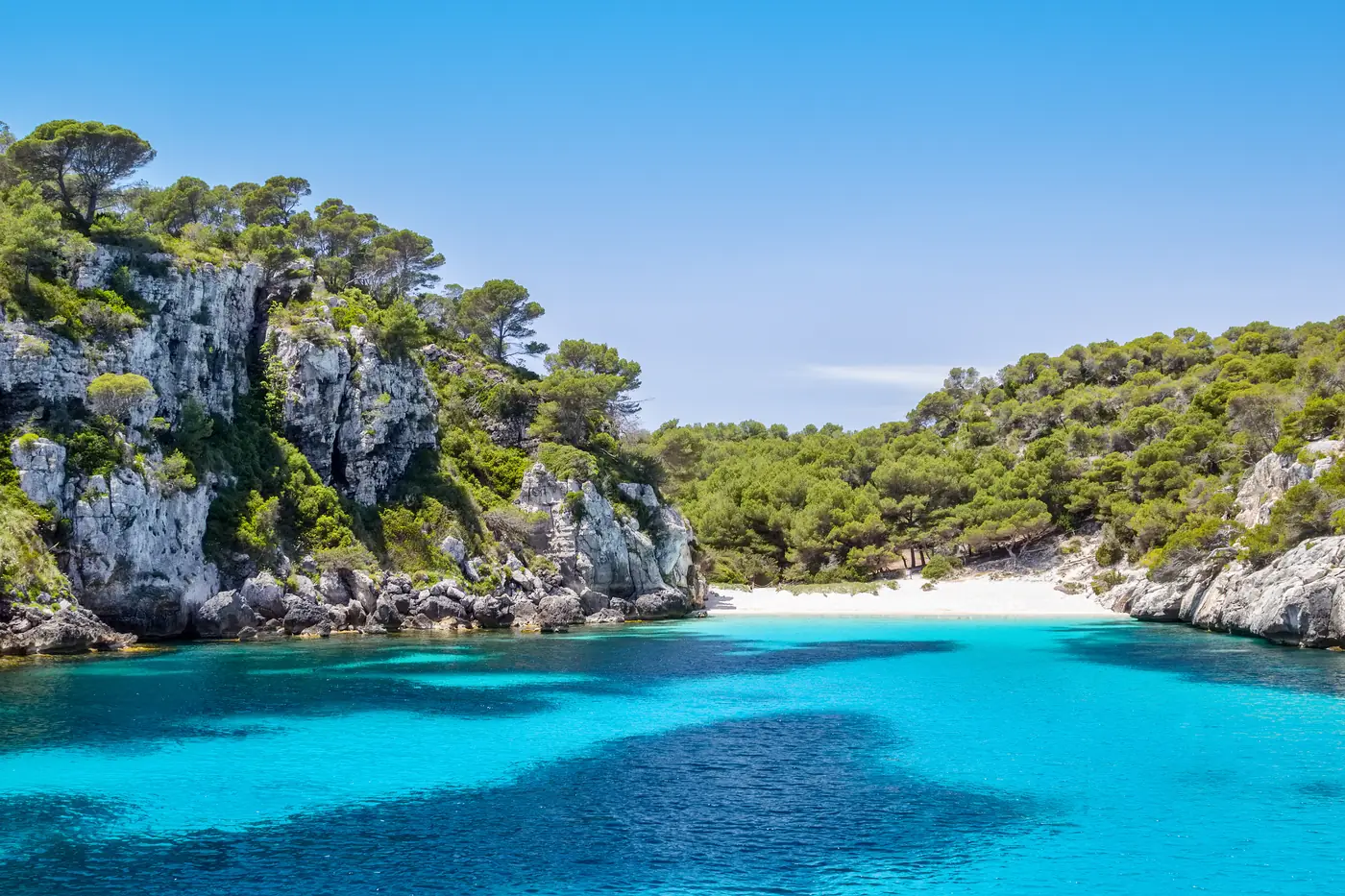
The public page gives you a specific frame: a 64-hectare island, existing resort infrastructure, bungalows, leisure facilities and an island route through Daet and Mercedes Port. Those details change the tone. We are no longer talking about a generic destination concept. We are talking about a place that has to be operated, revived, maintained and made legible to guests, members, creators, operators and potential capital partners.
You should read the island as a proof point, not a fantasy postcard. A proof point has friction. Boats need timing. Staff need training. Rooms need upkeep. Power and water need resilience. Food needs supply. Waste needs handling. Safety needs protocols. Local relationships need respect. A guest app needs offline or weak-connectivity logic. Payments need fallback. A beautiful resort can become a burden quickly if the operating layer is not real.
That friction is good for the Crays story because it forces honesty. If the island can work, then Crays is not only a social thesis or an app layer. It becomes a way to coordinate physical hospitality, real estate, member demand, technology, culture and capital around a place you can actually visit. If it cannot work, the island will reveal the weak points faster than any reviewer could.
So the right question is not “is the island beautiful?” The public imagery and asset description already answer that emotionally. The better question is: can we make a destination where the network does useful work every day? Can we make arrival easier, service smarter, stays more repeatable, creator events more valuable, payments clearer, identity portable and local community respected? That is the test.
What the public island page actually gives you
The Mercedes Island page is unusually concrete compared with many early destination pages. It gives a land size, a location, an asset base and a redevelopment frame. It points to Apuao Grande, a 64-hectare island, existing local community, beaches, forest, guest houses and legacy resort infrastructure. It names 30 bungalows, restaurant, beach bar, pool, tennis, gym, sauna, golf course and airstrip as part of the existing or referenced base. That does not complete due diligence, but it gives you real objects to inspect.
The page also presents a capital frame: an $8 million valuation basis, a $500,000 to $800,000 target raise, a first phase around 10 villas, and a structure around AMIHAN with 40 percent direct ownership or executive control plus a route toward the remaining 60 percent through a SPA path. You should treat those as claims that need documents, not as slogans. The more specific the page becomes, the more specific the verification should become.
That is the value of this page for a serious reader. It gives you a checklist. Where exactly is the asset? What title or rights exist? What does AMIHAN control? What is covered by the 40 percent? What are the conditions around the remaining 60 percent? What is included in the valuation basis? What capex does phase one require? Which bungalows are usable, which need redevelopment, and which facilities are operational, dormant or aspirational? Which permits, local obligations and environmental constraints apply?
You should also separate physical existence from operating readiness. A bungalow can exist and still require renovation. A beach bar can exist and still need staffing, supply and compliance. An airstrip can be present and still need safety assessment and operating clearance. A golf course can be part of the legacy story and still require maintenance. The page gives you a starting map; the operating audit tells you what is live.
The travel route matters too. Daet and Mercedes Port make the destination more tangible. A luxury or business-nomad destination succeeds or fails partly on arrival friction. How long is the transfer? How reliable is the boat? What happens in bad weather? Can high-value guests arrive without chaos? Can staff, supplies, construction materials and emergency support move efficiently? A remote island can feel magical for guests and brutal for operations. Both things can be true.
When you read the page, look at the numbers and the physical route together. A 64-hectare asset is large enough to carry multiple use cases: villas, retreats, beach club, creator events, wellness, private work stays, hospitality programming, conservation or local partnerships. It is also large enough to create management complexity. Scale is not automatically value. Scale becomes value when the operating plan can make parts of the asset productive without destroying the reason people want to be there.
This is why the public page should not be read like a brochure. It is a source trail. It tells you what to ask next. That is healthy. A serious Crays destination should invite inspection rather than rely on atmosphere.
The asset story needs the operator story beside it
Asset language and operator language need to sit beside each other. The asset story says: land, structures, ownership path, valuation, capex, development phases. The operator story says: who runs the place tomorrow morning, how guests arrive, how staff are trained, how food and energy are supplied, how rooms are cleaned, how safety is handled, how events are programmed and how revenue becomes repeatable. If one story outruns the other, the island becomes unstable.
We can bring brand, community, technology, hospitality know-how and capital attention, but none of that replaces execution. A 64-hectare island does not become a Crays destination because the thesis is interesting. It becomes one when the daily operating layer can carry guests without drama. Boats run. Rooms work. Staff know the standard. Payments clear. Local partners are respected. Events feel intentional. Maintenance happens before the guest notices.
The first phase around villas should be read as a discipline test. Villas are attractive because they can create premium stays, private retreats, founder weeks, creator residencies and higher-yield accommodation. They are also capex-heavy and operationally demanding. You need design, construction, utilities, furnishings, housekeeping, booking, pricing, guest support and maintenance. A villa that photographs well but operates badly is not a proof point.
The existing resort base can lower the starting burden if it is usable. Legacy infrastructure gives you memory: paths, buildings, leisure facilities, perhaps local awareness, perhaps service habits. But legacy infrastructure also carries hidden work: repairs, outdated systems, compliance gaps, weather damage, unclear documentation, staffing gaps and guest expectations shaped by the past. Due diligence has to separate usable asset from romantic ruin.
The operator story should include seasonality. Island demand is not flat. Weather, holidays, travel routes, local tourism patterns, international access and event calendars all affect occupancy. The Crays network can help by bringing member demand, creator programming, business retreats and event formats that are not purely seasonal tourism. But the operating plan has to show how that demand is scheduled, priced and served.
Another operator question is brand fit. Crays is not trying to build a generic resort. The island has to serve business nomads, founders, creators, investors, local community, hospitality guests and possibly project partners. That mix can be powerful and awkward. A founder retreat, a creator shoot, a family stay, a local event and an investor visit do not need the same atmosphere. The operator has to schedule and host them without turning the island into a confused calendar.
The app and Nostr layer can help only when the operator story is already grounded. If staff cannot handle arrivals, a local relay will not save the stay. If bookings are chaotic, Lightning payments are not the bottleneck. If guest programming is weak, badges will not create culture. Technology should amplify competence, not hide the absence of it.
A destination has to become a repeatable rhythm
A one-time island visit can be magical and still fail as a Crays proof point. The deeper goal is repeatable rhythm. A destination becomes powerful when people return for different reasons: work weeks, founder dinners, creator residencies, wellness retreats, villa stays, member gatherings, local exploration, film or music moments, capital conversations and quiet recovery. The island has to become more than scenery.
The Crays advantage should be orchestration. A normal resort sells rooms and experiences. We can connect rooms to members, members to creators, creators to fans, founders to work retreats, partners to capital conversations and the island to other Crays places. That does not mean every stay becomes networking. It means the destination can carry multiple modes without losing its soul.
Morning rhythm matters. Coffee, work, ocean, movement, local breakfast, app-based planning, private calls, light introductions. Afternoon rhythm matters. Beach, wellness, workshops, sailing, local trips, villa time, content creation. Evening rhythm matters. Dinner, music, founder conversations, film, fashion, art, awards, small rituals. If those rhythms are designed well, the island becomes memorable because people know how to live there, not only because the view is beautiful.
Creator activity can give the island culture. A photographer, musician, filmmaker, architect, chef or founder can create moments that travel through the app and the wider Crays network. But creator programming has to respect the place. The island should not become a content factory. The best creator use makes the destination more alive while preserving guest privacy and local dignity.
Business-nomad use needs strong infrastructure. Work retreats require connectivity, quiet rooms, reliable power, meeting spots, private call zones, good food, recovery options and predictable service. If we promise global business people a place to work and live, the romantic island idea has to meet unromantic uptime. A beautiful sunset does not compensate for a failed investor call.
Member access should be staged. A first-time guest may only need a clean booking and local welcome. A member may expect deeper access: preferred rooms, event priority, private introductions, creator evenings, partner offers or governance visibility. An operator or investor may need documents and structured conversations. The app should know which mode you are in and avoid mixing them.
The repeatable rhythm is what makes the island part of the Crays ecosystem instead of a separate hospitality asset. If a member can move from Crays Coffee to Crays Club to Crays World venues to Mercedes Island with identity, taste and trust still recognizable, then the network becomes tangible. You are not just visiting a property. You are moving through a connected life layer.
Nostr on an island is a venue stress test
The Mercedes Island page points to the same infrastructure pattern we use in the World route: one guest app, Nostr identity, an island Super Node, Lightning payments, AI matching, hospitality OS, community network and revenue-ready rails. On an island, those ideas become more useful and more fragile at the same time. Useful because local context matters. Fragile because failure is harder to hide.
A local relay can help carry venue-specific events: arrivals, service requests, access signals, local messages, event announcements, staff coordination, creator sessions and community discovery. Mesh can help when local proximity matters or normal connectivity is unreliable. But an island does not forgive vague infrastructure. If the guest app depends on a relay, the relay needs health monitoring. If payments depend on connectivity, fallback matters. If staff depend on the app, training matters.
Nostr identity is useful because your profile and social graph should not be trapped on the island. You may visit Mercedes Island, meet people, join an event, receive a badge, pay for a service, follow a creator and then carry parts of that context to a Crays Club, coffee node or another World venue. That is the point. The island becomes a node in your broader Crays life, not a separate resort account.
But not everything should travel. A room access event may need to stay local. A private service request should not become public. A medical or safety incident should be handled with discretion. A business retreat may require confidentiality. A public creator event can travel widely. A badge for attending a cultural weekend may be optional to display. The app has to sort these categories before the island goes live at scale.
Lightning and Nostr Wallet Connect need island-specific care. A coffee, tip, event ticket, boat transfer, villa deposit, room upgrade, creator unlock and service charge are different payment objects. Guests should know what they are paying for, whether the payment creates a public social signal, whether refunds apply, and which wallet permission is being used. Small payments can feel elegant. Large deposits need explicit confirmation and support.
AI matching has to stay modest. On an island, the wrong suggestion can feel more invasive because people are physically close. A useful system may suggest a founder dinner, a wellness slot, a creator event or a local activity. A bad system will make people feel profiled in a confined place. The concierge logic should explain itself lightly and give you control over visibility.
The real stress test is resilience. What works when the internet is weak? What works when a guest loses a phone? What works when a payment fails after a boat transfer? What works when staff need to override access? What works when a local relay is down? What works when a guest wants to disappear from local discovery? A serious island product needs these boring answers.
The finance link should stay transparent
The island sits close to Fund and Real Estate because it is an asset case. That closeness is useful, but it needs transparent separation. Visiting the island, joining the community, operating a venue, buying a stay, contributing expertise and entering an investment discussion are different paths. We should never blur them because the story is attractive.
The destination can inspire you while still requiring serious due diligence for any capital conversation. You should look for asset ownership, operator rights, development budget, legal structure, valuation assumptions, permits, environmental constraints, revenue forecasts, risk factors, reporting, fee structure, governance rights and exit logic. The stronger the lifestyle story, the more calmly those documents need to be handled.
The public page references an $8 million valuation basis and a $500,000 to $800,000 target raise. Those are not decorative numbers. They should connect to use of proceeds, phase plan, capex, working capital, operator readiness and milestones. If the first phase is about 10 villas, ask what that includes: construction, renovation, furnishings, utilities, staffing, marketing, booking systems, permits, contingencies and opening timeline.
The AMIHAN structure deserves careful reading. A reference to 40 percent direct ownership or executive control and a SPA route toward the remaining 60 percent can be meaningful only when the documents explain the rights. What is owned? What is controlled? Who signs? What conditions apply? What liabilities exist? What happens if the remaining route does not close? What is the investor actually exposed to?
We should keep the island's public narrative exciting, but capital should stay in its own lane. A guest should not feel that a beautiful stay is a disguised pitch. A member should not need to parse offering language to enjoy the place. An investor should not rely on community energy instead of formal documents. The Association and Fund layers exist partly to keep those doors labeled.
If we keep that separation clean, the island becomes more credible. It can be a destination, a hospitality lab, a real estate case, a creator location, a member retreat and a capital conversation without pretending all those things are the same product.
Local reality is not decoration
An island project does not exist outside its local context. The public page mentions an existing local community, and that line should not be treated as atmosphere. A serious Crays destination has to understand local employment, supply, transport, environmental limits, public authority, culture, language, safety, weather and the social reality around Mercedes and Camarines Norte. You cannot import a global lifestyle brand onto an island and ignore the people already connected to the place.
Local staff are not just labor. They are memory, trust, service quality, safety and cultural translation. A guest may arrive for the Crays network, but the daily experience depends on people who know the island, the sea, the weather, the suppliers and the rhythms of the region. If we want the destination to feel alive, local knowledge has to shape the operation instead of being hidden behind a brand layer.
Environmental reality matters too. A 64-hectare island is not only an asset; it is an ecosystem. Beaches, forest, water, waste, building materials, energy, guest volume and marine access all create obligations. A premium destination cannot behave as if beauty is an unlimited resource. Development should protect the qualities that make the place valuable in the first place.
Transport is part of local reality. Daet, Mercedes Port and island transfer logistics shape who can come, how often, at what cost and with what risk. A business-nomad retreat needs reliable arrival windows. A creator event needs equipment movement. A villa stay needs luggage, food and maintenance flow. Emergency planning needs more than a marketing route. Every island promise has a boat behind it.
Technology should support the local layer rather than erase it. A Super Node can help coordinate service. The app can help guests request, pay, book and discover. Nostr identity can help people carry context. But the local host, boat operator, chef, gardener, maintenance team, security team and community partner still make the destination real. We should design the system so it gives them better tools, not so it pretends they are invisible.
The best version of Mercedes Island is not a detached luxury bubble. It is a place where global members, creators and operators meet local reality with taste and respect. That is harder than opening a resort. It is also the only version worth building.
What you should verify before you believe the island story
The island story is strong enough that it deserves a serious verification map. Start with land and rights. You want to understand exactly what is owned, controlled, optioned, leased or still subject to a closing path. If the page references direct ownership or executive control through AMIHAN, ask what legal documents define that control. If it references a route toward the remaining 60 percent, ask what conditions, timelines, counterparties, liabilities and approvals sit behind that route.
Then verify the physical asset. A 64-hectare island is not one uniform object. It has usable land, protected areas, beaches, forest, paths, structures, utilities, water, access points and zones that may be easier or harder to develop. You should want a site map, current photos, facility status, survey information, title documentation, environmental notes and a clear difference between “exists,” “usable,” “needs renovation,” “planned” and “aspirational.” Those words should never be blurred.
Then verify the operating plan. Who runs day-to-day hospitality? Who manages staff? Who controls guest experience? Who handles maintenance, bookings, food, safety, transport, event programming and local supplier relationships? A destination without a named operating discipline is just land with hope attached. We should be able to show how the guest experience works before, during and after the stay.
Then verify phase one. If the first visible phase is around 10 villas, ask what a villa means in this plan. New build or renovation? Which locations? What design standard? Which permits? Which utilities? Which budget line? Which delivery schedule? Which revenue assumption? Which guest profile? Villas can be the anchor product, but they can also become the place where vague planning becomes expensive.
Then verify infrastructure. Power, water, sewage, waste, internet, emergency response, boat transfer, storage, staff housing, supplies and weather contingency are not glamorous, but they decide whether a destination is operable. A Crays Super Node can help with digital coordination, but it cannot replace water pressure, food logistics or safe transport. The physical base and the digital base have to be planned together.
Then verify the technology claims. If the island will use a local relay, ask what it carries and who operates it. If it will use mesh, ask what problem mesh solves on the island. If it will use Lightning payments, ask which payments, what fallback, what custody model and what receipts. If it will use AI matching, ask what data informs the matching and how guests opt out. If it will use badges, ask what the badges mean. Every technical claim should point to a guest or operator consequence.
Then verify capital boundaries. Any investment-related path should live in formal documents, not in the emotional pull of the island. The public destination page can create interest. The Fund, Real Estate and legal routes should carry eligibility, disclosure, risk, fee, governance, reporting and exit information. You should never need to guess whether you are reading a lifestyle story or entering a capital conversation.
Finally, verify the human plan. Who is the host? Who is the local team? Who understands the region? Who maintains the Crays standard? Who handles conflict? Who protects guest privacy? Who decides when the island is ready for members, creators, investors or public stays? A place like this needs human accountability as much as capital.
Why this destination belongs in the Crays map
The island belongs in the Crays map because it ties the abstract layers together in one place. Our public spine gives you the association logic. The World layer explains how venues can become network nodes. The Tech layer explains identity, matching, mesh, payments and operating rails. Finance and Fund explain why real assets and capital routes matter. Coffee, Club and Award explain daily ritual, private social density and creator culture. Mercedes Island can test all of those at once.
Start with identity. A guest should not become a new account just because they moved from a city club to an island. Your Crays profile, preferences, membership signals, creator connections and wallet settings should travel carefully, with privacy boundaries. The island can show whether portable identity is more than a slogan.
Then look at hospitality. A resort is a full-stack hospitality test: rooms, food, events, wellness, service, local transport, guest safety, maintenance and atmosphere. If the Crays operating model works there, it can work in simpler places. If it fails there, the island will show exactly where the model is too thin.
Then look at community. An island can host deeper relationships than a normal app surface. People stay longer, share meals, work together, recover together, create together and remember the place. That is why the Crays community thesis can become stronger there. It also means social design has to be more thoughtful. You cannot over-network people in a destination where they came to breathe.
Then look at creators. The island can become a location for film, music, fashion, architecture, writing, founder stories, wellness and cultural events. But we should not reduce the place to content. A great creator program respects privacy, local culture and guest experience. The app can help with ticketing, fan access, zaps, voting, private rooms and proof of attendance, but the place has to remain a place.
Then look at capital. The island gives capital a visible use case. Money does not float around a vague ecosystem; it can be tied to land, villas, operations, stays, events and revenue. That is powerful only if reporting is strong and boundaries are clear. Capital should see the asset and the operating plan, not hide behind lifestyle energy.
Then look at network expansion. If Mercedes Island works, it becomes a reference model for future destinations: what to copy, what to avoid, which infrastructure is essential, which rituals create return behavior, which guest segments respond and which operational requirements cannot be skipped. That is how one island can become more than one project.
For you, the ecosystem fit should become obvious only after the parts connect. You should be able to say: I see the place, I see the asset, I see the operator problem, I see the guest journey, I see why Nostr helps, I see where capital belongs, I see what still needs proof. That is the level of clarity this page has to earn.
Success looks like rituals, not only villas
A beautiful resort can fill a camera roll once. A Crays destination has to create repeatable rituals: morning work, founder dinners, creator shoots, wellness, sailing, coffee, local discovery, private events, member retreats and reasons to return with new people. Villas matter because people need places to stay. Rituals matter because people need reasons to come back.
The app layer matters because it can connect those rituals. You book, arrive, meet, pay, unlock, vote, share, tip, return and carry your status to the next Crays place. A creator weekend can become a public story. A private founder week can stay private. A member dinner can create optional badges. A coffee ritual can connect back to Crays Coffee. A wellness retreat can lead to another destination. The island becomes part of a larger life graph.
Success also looks like operational calm. Guests arrive without confusion. Staff know what the app is telling them. Payments have support paths. Rooms are maintained. Local partners are respected. The island has backup plans. The operator can see performance. Investors, if any, receive reporting through the proper channel. The brand does not overpromise what the island cannot yet deliver.
The first guests should not be asked to believe in the whole future. They should be able to enjoy the place as it is and understand what is being built next. Early phases are allowed to be imperfect if they are honest. A pilot stay, a founder retreat, a creator weekend and a phase-one villa program can all be meaningful if they are labeled correctly.
The standard is not whether the ambition sounds large. The standard is whether the island makes Crays easier to understand because you can walk through it. You can see the land. You can meet the operator. You can feel the hospitality. You can use the app. You can pay. You can attend a ritual. You can leave with a clearer sense of how identity, place, community, capital and technology belong together.
If Mercedes Island can do that, it becomes one of the strongest pages in the Crays ecosystem. It will not prove everything, but it will prove the hardest thing: that our open web and real-world life thesis can survive contact with sand, staff, weather, guests, budgets and time. That is real proof, not presentation polish.
There is a quieter success condition too: the island should make the local relationship stronger, not weaker. A destination project can easily become a private fantasy if it ignores labor, suppliers, access, ecology, maintenance and community context. The better version treats the island as a place with neighbors, weather, local knowledge and limits. That means local hiring, supplier discipline, waste handling, transport planning, emergency procedures, guest education and respect for the environment are not side details. They are part of whether the place deserves the Crays name.
For you, the best sign will be specificity. A serious update should be able to show which facilities are usable, which ones need renovation, which villas belong to phase one, who operates guest experience, how transfers work, what local permits require, what the app actually does on site and where capital reporting lives. If those answers become clearer over time, the Life route grows stronger. If the imagery improves while operational details stay vague, stay skeptical.
The island should also teach us what not to scale. Some rituals may work because the place is isolated. Some hospitality flows may need more staff than a city venue. Some technology may be unnecessary because human hosting works better. Some creator programming may fit a retreat but not a neighborhood club. That learning is valuable only if we name it. A real destination pilot should not pretend every lesson is a success story. It should show which parts of the Crays model become stronger on an island and which parts need a different shape somewhere else.
That honesty matters for members too. You should be able to arrive with excitement and still know which parts are finished, which parts are pilot-only and which parts are future phases. A destination earns loyalty when ambition and reality are both visible. The island does not need to pretend to be complete on day one. It needs to make every stage legible.
Sources worth opening
Use these sources to check the island route in layers: the Mercedes Island page for the concrete project frame, Real Estate and Fund for the asset and capital context, World and Tech for the operating stack, and Nostr standards for identity, local relay and wallet behavior.