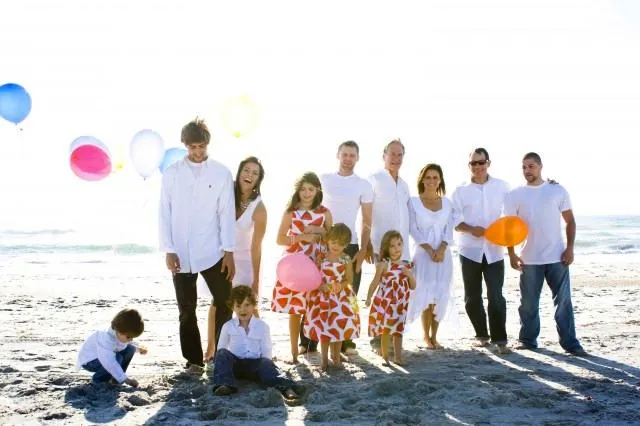

 Enoch Root
 fiatjaf
 William Casarin
 Vitor Pamplona
 PabloF7z
 Hodlbod
 Yuki Kishimoto
 Mike Dilger
 Alex Gleason
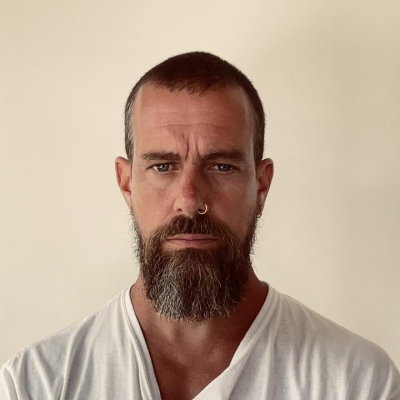 Jack Dorsey
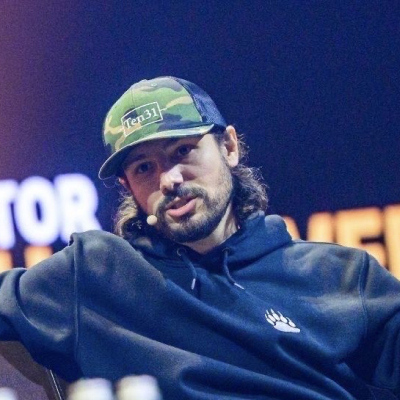 ODELL
ODELL Ben Arc
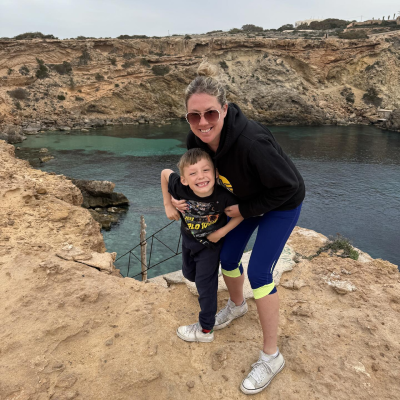 Vanessa
 Terry Yiu
 Derek Ross
 Karnage
 OpenMike
Sepehr Safari
Sepehr Safari built Pinstr, a Nostr-native attempt at boards and curation where saved things can live in public protocol space instead of inside one platform account.
Why Sepehr Safari matters
Sepehr Safari built Pinstr, a Nostr-native attempt at boards and curation where saved things can live in public protocol space instead of inside one platform account. That is the clean entry point: He matters because Nostr is not only posting. It is also collecting, arranging and remembering.
Sepehr Safari belongs to the part of Nostr where curation and visual collecting stops being an idea and becomes a working surface. The public record around Pinstr, Nostr boards and curation over relays shows a person or handle choosing practical problems over grand speeches.
That matters because Nostr is still a young network with an old problem. Protocol people can explain why open identity, relays and portable social graphs are important. Ordinary users judge something simpler: can I open it, trust it, understand it, and come back tomorrow without feeling stupid?
Sepehr Safari's work sits right in that gap. It is not the whole story of Nostr, but it is one of the pieces that makes the larger story believable.
The work before the label
The label "Pinstr builder" helps, but the better biography is in the work: Pinstr, Nostr boards and curation over relays. Those names tell the reader where Sepehr Safari has spent time, what kind of friction looked worth removing, and which users were worth serving.
Visual curation, Small product surface, Protocol-backed collections, Pinterest-like behavior without the platform lock: those are not decorative traits. They are visible choices. They show up in the kind of product surface, repository, documentation, grant record or public tool that ends up carrying the name.
Nostr biographies often look different from classic startup biographies. A person may be known by a handle. A project may live in a GitHub repo before it has a clean landing page. A useful tool may be famous among builders and nearly invisible to outsiders. That roughness is not a defect; it is how early open networks usually look before the polished history gets written.
For Sepehr Safari, the public work points toward curation and visual collecting. That is the lane to remember before any title, tagline or community reputation gets in the way.
Pinstr gives the story a surface
Pinstr is the first solid object in the story. It is something a reader can open, inspect, install, run, compare or use as a reference point. Without that surface, every Nostr biography becomes soft and forgettable.
For Sepehr Safari, Pinstr shows where time and judgment went. It also hints at the imagined user: a developer, writer, creator, relay operator, wallet user, community host, local language group, power user or newcomer trying to understand why this network exists at all.
The surrounding work makes the picture sharper: Nostr boards and curation over relays. Put together, those projects show a contributor working around curation and visual collecting, not just touching Nostr as a passing curiosity.
The famous names draw attention, but tools like this decide whether attention turns into use. A protocol can win an argument and still lose the day if nobody builds the surfaces where people actually live.
The Nostr role in plain language
Inside Nostr, Sepehr Safari functions as a builder. In plain language, that means one corner of the network becomes easier to use, easier to run, easier to understand, easier to fund or harder to break because this work exists.
That role has consequences. In a platform company, product boundaries are decided from the top. In Nostr, boundaries are negotiated by clients, relays, keys, wallets, signing flows, public notes, app conventions and user habits. Work in curation and visual collecting can change the feel of the whole network without owning the network.
Sepehr Safari is therefore not interesting because of a vague "decentralized" label. The interesting point is concrete: Pinstr and the surrounding work touch the places where keys, relays, clients, media, money, communities or developer workflows become visible to real people.
A collection becomes more interesting when it can move, but more difficult when no platform holds the whole room together. That tension is useful. It keeps the story grounded in the actual problem instead of turning Nostr into a slogan.
What changed for users and builders
The useful question is not whether Sepehr Safari is famous. It is what became easier after the work appeared. Around curation and visual collecting, the answer is practical: someone got a clearer path, a working client, a library, a relay tool, a wallet bridge, a publication surface, a call path, a signer, a dashboard or a way to understand the network without waiting for a platform to allow it.
That can sound small from the outside. Inside Nostr it is not small. Many basic behaviors are still being shaped in public: logging in safely, finding people, publishing long-form work, paying creators, running relays, controlling spam, recovering keys and carrying one identity across many apps.
Sepehr Safari's work pushes one of those behaviors forward. It does not need to solve all of Nostr to matter. In an open ecosystem, a focused tool can quietly raise the standard of what other tools are expected to do.
This is where the biography becomes more than a name list. The adult story is repeated choice under pressure: technical pressure, community pressure, money pressure, design pressure, language pressure, security pressure or the simple pressure of making a strange system feel understandable.
The human read without mythology
The human part is not gossip. It is taste. Sepehr Safari keeps returning to visual curation and small product surface. That tells you what kind of friction became intolerable and what kind of user was being imagined.
Nostr attracts people who dislike permission gates, but that shared instinct creates very different lives. Some write specs. Some build apps. Some run relays. Some teach. Some design. Some handle payments. Some make culture feel alive. Sepehr Safari belongs to the part of the map where curation and visual collecting becomes visible as work.
There is no need to inflate the story. Pinstr, Nostr boards, curation over relays already gives the reader enough material. The better sentence is quieter: this is the work, this is the role, this is why the network feels a little different after it exists.
That restraint matters. A good Nostr portrait should not turn every contributor into a saint or a founder archetype. It should show enough public work that the reader can decide where the person's influence begins and where it stops.
Receipts in the public record
The strongest public anchors are OpenSats July 2023 grants, Pinstr repository, GitHub: sepehr-safari and Pinstr app. They connect to the person, handle, project, grant record, codebase, documentation or product surface that makes the story verifiable.
That matters for Sepehr Safari because Nostr is full of handles, mirrors, relays, forks and half-remembered launch posts. Without receipts, every scene turns into folklore. With receipts, the reader can follow the work and decide how much weight it deserves.
The sources do different jobs. Some prove that the work exists. Some show who maintained it. Some explain why it was funded. Some show how the tool is meant to be used. Together they make the portrait sturdier than a list of community impressions.
When the trail is project-first rather than personality-first, that is part of the truth. Open-source people are often best understood through the things they keep alive, the issues they answer, the repos they touch and the habits their tools teach other builders.
Where Sepehr Safari sits on the map
Place Sepehr Safari near curation and visual collecting. From there, the connections spread through clients, libraries, relays, wallets, creators, signing flows, grants, public notes or developer conversations. That is how influence moves in Nostr: through reusable pieces and repeated habits, not through a single org chart.
A small contributor can be highly relevant if the work sits under something many people use. A public voice can matter if it gives outsiders the first sentence that makes the network legible. A local tool can matter if it gives one community a cleaner way in.
Sepehr Safari gives readers a route into curation and visual collecting. Once that route is clear, the rest of the ecosystem becomes easier to navigate. You can see which projects are cousins, which debates are recurring and which open questions still shape the field.
That is why the People map has to include builders beyond the famous names. Nostr is not only the people who appear in mainstream press. It is also the people whose work becomes normal enough that everyone forgets it had to be built.
Why this lane matters now
curation and visual collecting is not a side street in Nostr. It is one of the places where the network either becomes usable or remains a beautiful argument. People do not experience a protocol directly. They experience the client they open, the wallet that pays, the relay that responds, the signer that protects a key, the page that explains a concept or the community tool that keeps a room alive.
Sepehr Safari's lane matters because open networks fail in boring ways. They fail when onboarding is confusing. They fail when developers cannot find a stable library. They fail when creators cannot get paid. They fail when relay behavior feels random. They fail when good writing has nowhere to live. They fail when identity is portable in theory but painful in practice.
The work around Pinstr pushes against one of those boring failures. It may not look dramatic from the outside, but that is exactly why it is important. Good infrastructure often becomes invisible only after somebody has absorbed the messy work of making it ordinary.
This is also where Nostr's culture gets tested. A network that talks about freedom has to give people working tools, not only ideals. Around curation and visual collecting, Sepehr Safari helps turn that test into something a reader can actually inspect.
That is the difference between a name and a real profile: the reader can connect the person to a job the ecosystem actually needs done.
What to open first
Start with Pinstr. Then follow the rest of the public trail through Nostr boards and curation over relays. That sequence gives the reader a cleaner picture than a search-result pile because it moves from the most visible surface into the surrounding work.
The best supporting anchors are OpenSats July 2023 grants, Pinstr repository, GitHub: sepehr-safari and Pinstr app. They are useful because they put the story close to primary material: code, grant notes, product surfaces, documentation or public project context. That kind of evidence is especially important in Nostr, where people often work across handles, forks and small experiments rather than through one polished company page.
Open those sources with one question in mind: what did this person make easier? Sometimes the answer is obvious. A client opens. A wallet connects. A relay tool runs. A document explains the missing piece. Sometimes the answer is subtler: a design habit spreads, a library removes boilerplate, a local community gets its own way into the network.
For Sepehr Safari, the answer points back to curation and visual collecting. That is the useful memory. The name is not just another entry in a directory; it is a marker for a specific kind of work inside the Nostr ecosystem.
The open edge
Sepehr Safari's story is still moving because Nostr itself is still moving. The same work can look different when new clients adopt it, when funding changes, when relays grow stricter, when wallets get easier, when spam gets worse or when a user habit suddenly becomes standard.
That does not make the biography weaker. It makes it more honest. In open-source networks, influence is often visible before it is settled. The important thing is to name the work clearly enough that readers can track what changes next.
A collection becomes more interesting when it can move, but more difficult when no platform holds the whole room together. It is the pressure line that will decide whether the work around Pinstr stays niche, becomes infrastructure or gets replaced by something cleaner.
The biography in one line
He matters because Nostr is not only posting. It is also collecting, arranging and remembering.
Sepehr Safari is best understood through Pinstr, Nostr boards and curation over relays, the habit of visual curation, and the unresolved problem of a collection becomes more interesting when it can move, but more difficult when no platform holds the whole room together.
Keep that memory and the name becomes useful. Sepehr Safari is part of the Nostr story because curation and visual collecting needs people who keep choosing the hard practical work after the first wave of excitement has passed.
Sources worth opening
- OpenSats July 2023 grantsGrant source for Pinstr.
- Pinstr repositoryPublic source for Pinstr.
- GitHub: sepehr-safariPublic builder profile.
- Pinstr appLive product surface when available.