 Crays
CraysNostr Onboarding Apps
Onboarding is not just account creation. In Nostr, the first session teaches a reader what a key is, what an app can and cannot do, how relays affect visibility and why a signer or backup habit matters before the first post becomes habit.
The first Nostr hour is fragile
A beginner does not arrive with a protocol diagram in their head. They arrive with habits from platforms: create account, pick username, follow people, post. Nostr interrupts that rhythm with public keys, private keys, relays, clients, signers, NIP-05 names and sometimes wallet prompts. Each concept is reasonable on its own. Together, in the first ten minutes, they can feel like a wall.
Good onboarding apps and guides reduce that wall without lying. They do not pretend Nostr is just another platform. They introduce the key model gently, keep the private key away from casual copy-paste, help the reader choose a client, make following people feel possible and delay advanced relay tuning until the user has a reason to care.
The first hour also shapes safety habits. If a beginner learns that an nsec is just another login password, that mistake can follow them for years. If they learn that the client is a window and the key is identity, the rest of the ecosystem becomes less mysterious.
What onboarding has to explain
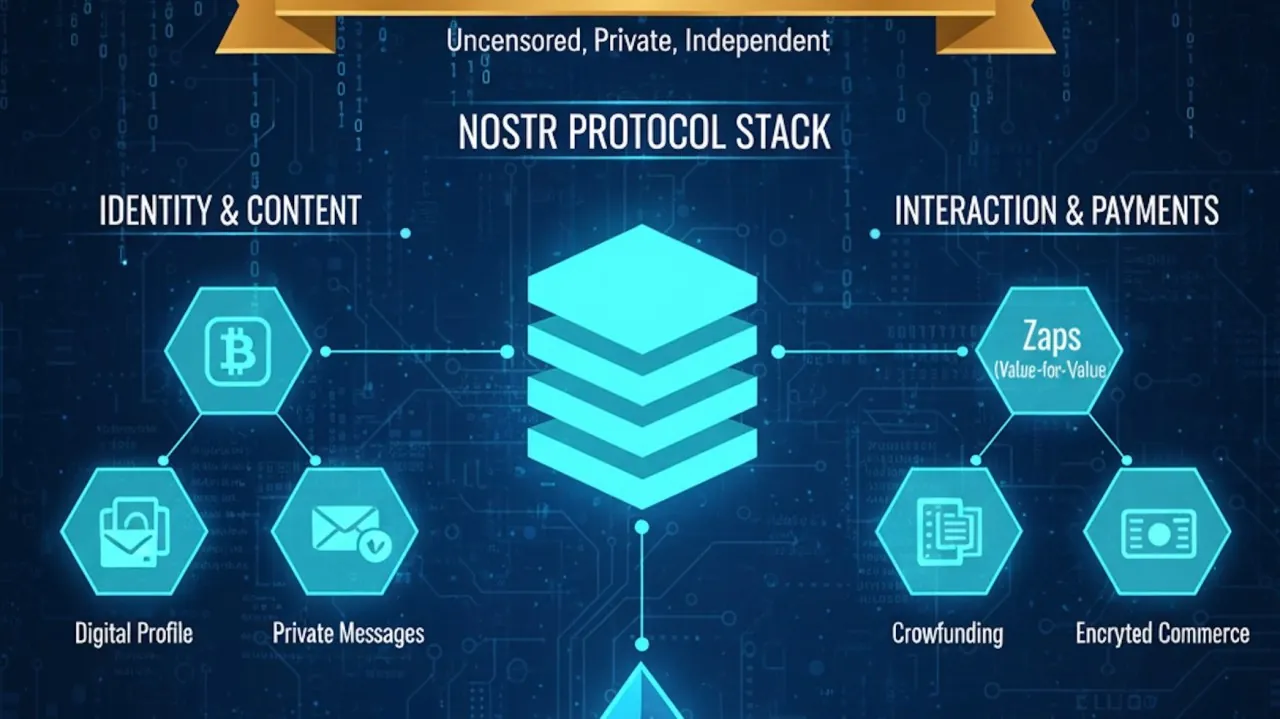
The minimum onboarding path has four concepts: key, client, relay and NIP. The public/private key pair controls identity and signing. The client is the app surface. Relays carry and store signed events according to their own policies. NIPs are shared standards that let different tools understand the same kind of data. A good onboarding flow does not dump all four as jargon. It places each one at the moment the reader needs it.
A signup screen can explain the key. A client picker can explain the window. A blank timeline can explain relays and discovery. A profile name field can introduce NIP-05. A zap prompt can introduce wallet connections. A browser permission prompt can introduce NIP-07. When concepts appear inside real actions, they become easier to remember.
That is why this Apps category links to Basics, Signers, Clients and Wallets. Onboarding is a bridge section. It is not only a list of beginner products; it is the first route through the mental model.
The empty timeline problem
One of Nostr's hardest onboarding problems is the empty or uneven timeline. A user may create a key, open a client and see little of value because they have not followed anyone, relay discovery is thin, search is weak or the client is not tuned for their interests. On a centralized platform, the company fills that gap with recommendation systems. Nostr has to solve it through lists, starter packs, social discovery, directories, search tools, relay hints and community routes.
This is a product challenge, not just a protocol challenge. A client that makes discovery easy can feel alive. A client that leaves a reader alone with a key and a blank feed can make Nostr feel dead even when the network is active. Onboarding tools need to help users find people, topics and communities without forcing them into one corporate algorithm.
The best route is not to recreate platform addiction. It is to give the reader enough context to choose. Start with known public accounts, topical lists, trusted curators, project pages and clients that make follow flows clear. Then let the user reshape the feed instead of being trapped by it.
NIP-05 and human handles
Public keys are powerful but unfriendly. NIP-05 identifiers let a user attach a human-readable name, usually in the form of an address-like handle, to a public key through a domain. This helps recognition and reduces copy-paste mistakes, but it also introduces trust in a domain. A NIP-05 name is not the identity itself; the public key remains the cryptographic identity.
Onboarding pages need to explain that distinction clearly. A domain can help people find or recognize a user. It can also disappear, change policy or become misleading if a user treats it as the root of identity. The right mental model is: the handle helps humans; the key signs events.
For beginners, this often lands best through comparison. A username on a platform is granted by the platform. A NIP-05 name is a pointer from a domain to a public key. It is useful, social and imperfect. That nuance belongs early, before the reader mistakes a friendly handle for account ownership.
Wallets and zaps without overload
Zaps are one of the most distinctive Nostr experiences, but they can overwhelm a first session. Lightning, invoices, custodial wallets, self-custody, Nostr Wallet Connect and client integrations are a lot to explain while the reader is still learning keys and relays. Onboarding apps need to decide whether payments are part of the first route or a second route.
A good beginner path can mention zaps without requiring wallet setup immediately. First make identity and reading comfortable. Then explain how a wallet connects, what gets approved, and why payment UX depends on both the client and the wallet surface. This reduces the chance that a reader confuses a Nostr key with a wallet seed or treats every signing request as money-related.
The Apps hub keeps wallets nearby but not mixed into the first client decision. That separation helps readers understand that social identity, signing and payments can be connected without being the same thing.
What a good onboarding product feels like
A good onboarding product feels patient. It uses plain language. It gives the reader a next step, not a lecture. It explains the consequence of each sensitive action. It treats backups, signers and relays as normal parts of the experience. It makes the first follow and first post feel achievable. It gives the reader a way to recover from confusion without hiding the fact that Nostr is different.
It also links outward. No onboarding app can teach the whole ecosystem in one flow. The best ones connect to clients, signers, wallets, relays, basic guides and source pages at the right moments. That is the standard this hub uses: the card is a doorway, and the article gives the reader enough map to continue.
Onboarding is where Nostr either becomes a usable open network or remains a private club of people who already understand the vocabulary. That makes this category central, not beginner filler.
Sources worth opening
- nostr.how get started - Beginner path for keys, clients and first use.
- nostr.how clients - Client overview with platform and product context.
- nostr.org - Protocol overview and official entry point.
- nostr-protocol/nips - Canonical standards repository for Nostr implementation proposals.
- NIP-07 - Browser signer interface exposed as window.nostr.
- NIP-46 - Remote signing flow for clients and bunker-style signers.
- NIP-65 - Relay list metadata for read and write relay discovery.